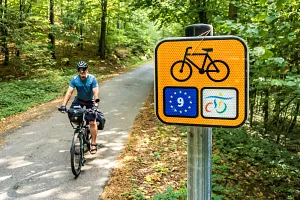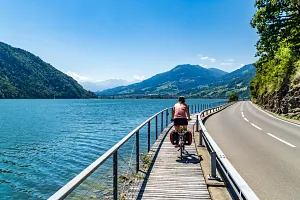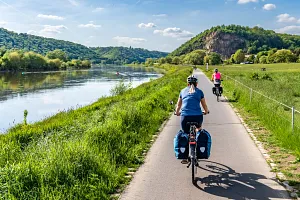
Cycling Tour Brandenburg in Germany - Cottbus to Eberswalde
Although eastern Brandenburg is not one of Germany's best-known tourist regions, it has remained one of my favourite cycling destinations for several years. You won't find high mountains here or places that regularly appear in travel guidebooks. Instead, the region attracts visitors with its vast forests, lakes, small and peaceful towns with a pleasant atmosphere, and excellent cycling infrastructure. This time, I returned to the area to ride another section of the popular Tour Brandenburg route.
Join us on our new 🟢 Komoot account!
Cycling Partners



Route on the map
GPX file (GPS track): cyclingthread.com-brandenburg-2025.gpx
Tour Brandenburg - table of contents
- 1,111 kilometres of cycling adventure in Germany
- No complaints about Deutsche Bahn
- Starting Tour Brandenburg in Cottbus
- Cottbus See - one of Germany's newest lakes
- A landscape shaped by nature and industry
- Comfortable cycling through Brandenburg
- Two of Brandenburg's most beautiful landscapes
- Beeskow for a longer break
- The first cyclist on a new cycle path
- Fahrradstraße - bicycle street in Brandenburg
- Former Oder riverbed near Wriezen
- One of the longest cycling bridges in Europe
- The unique Niederfinow ship lifts
- Cycling along the charming Finow Canal
- The journey ends in Eberswalde
- A new inspiration - Historic Town Centres
1,111 kilometres of cycling adventure in Germany
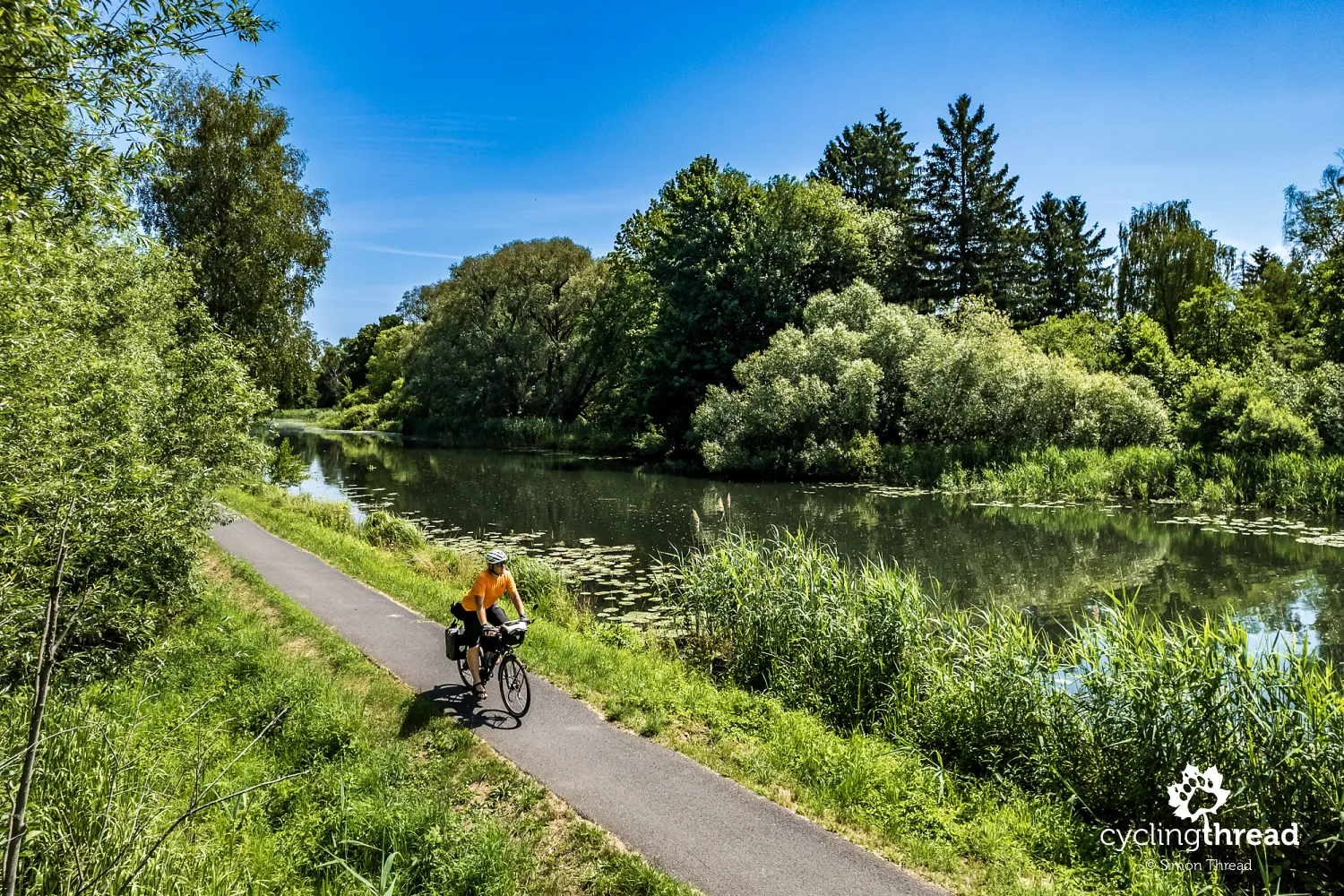
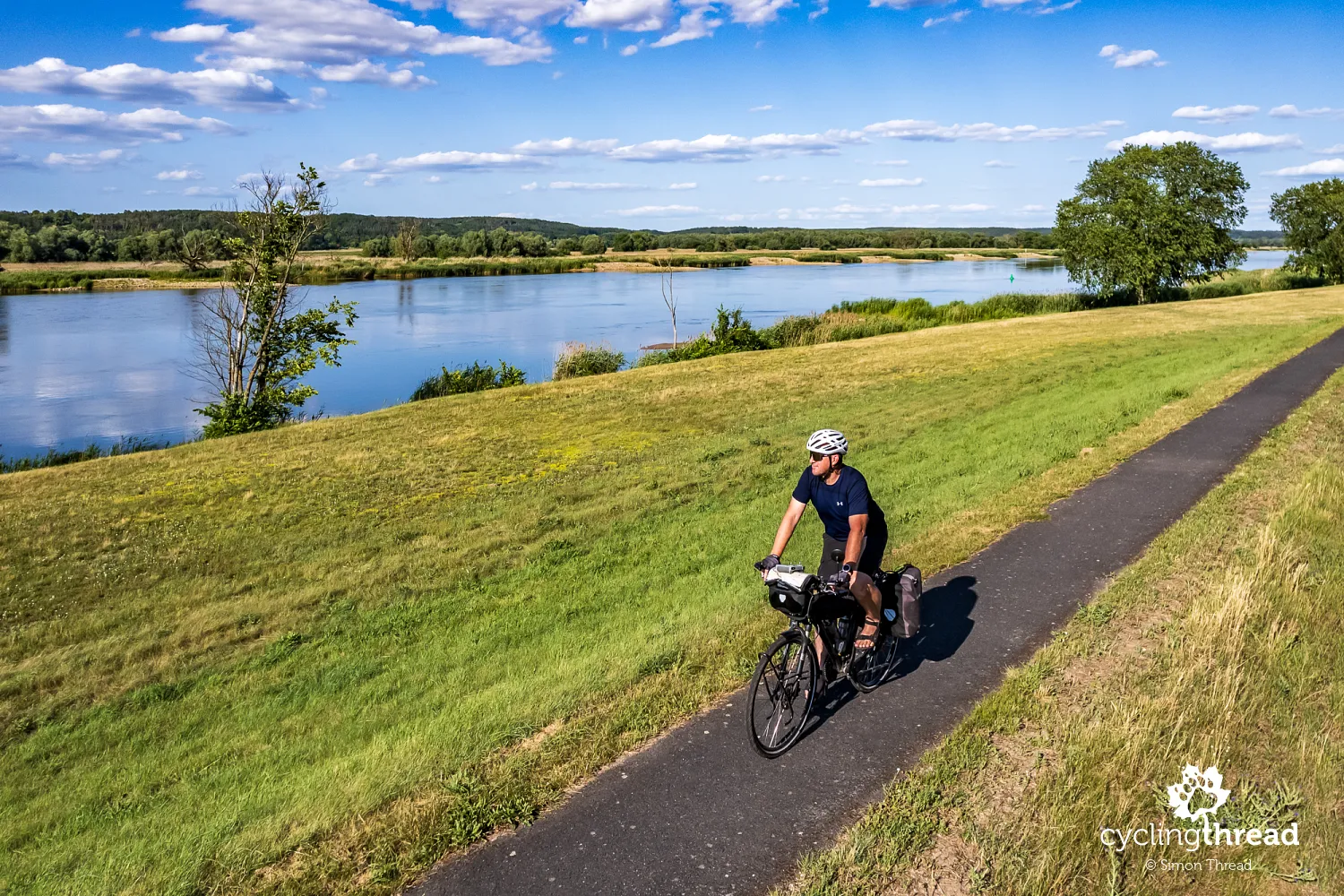
Tour Brandenburg is the longest signposted regional cycling route in Germany - according to official figures, it stretches for an impressive 1,111 kilometres. That is far too much for a single trip, but at the same time more than enough to provide inspiration for several shorter multi-day rides. During our previous cycling journeys through Brandenburg, we explored the northern part of the route, while this time I chose its eastern section, running from Cottbus to Eberswalde. Over 250 kilometres, I travelled parallel to the Oder River through the peaceful landscapes of eastern Brandenburg, linking towns, lakes, forests and protected natural areas.
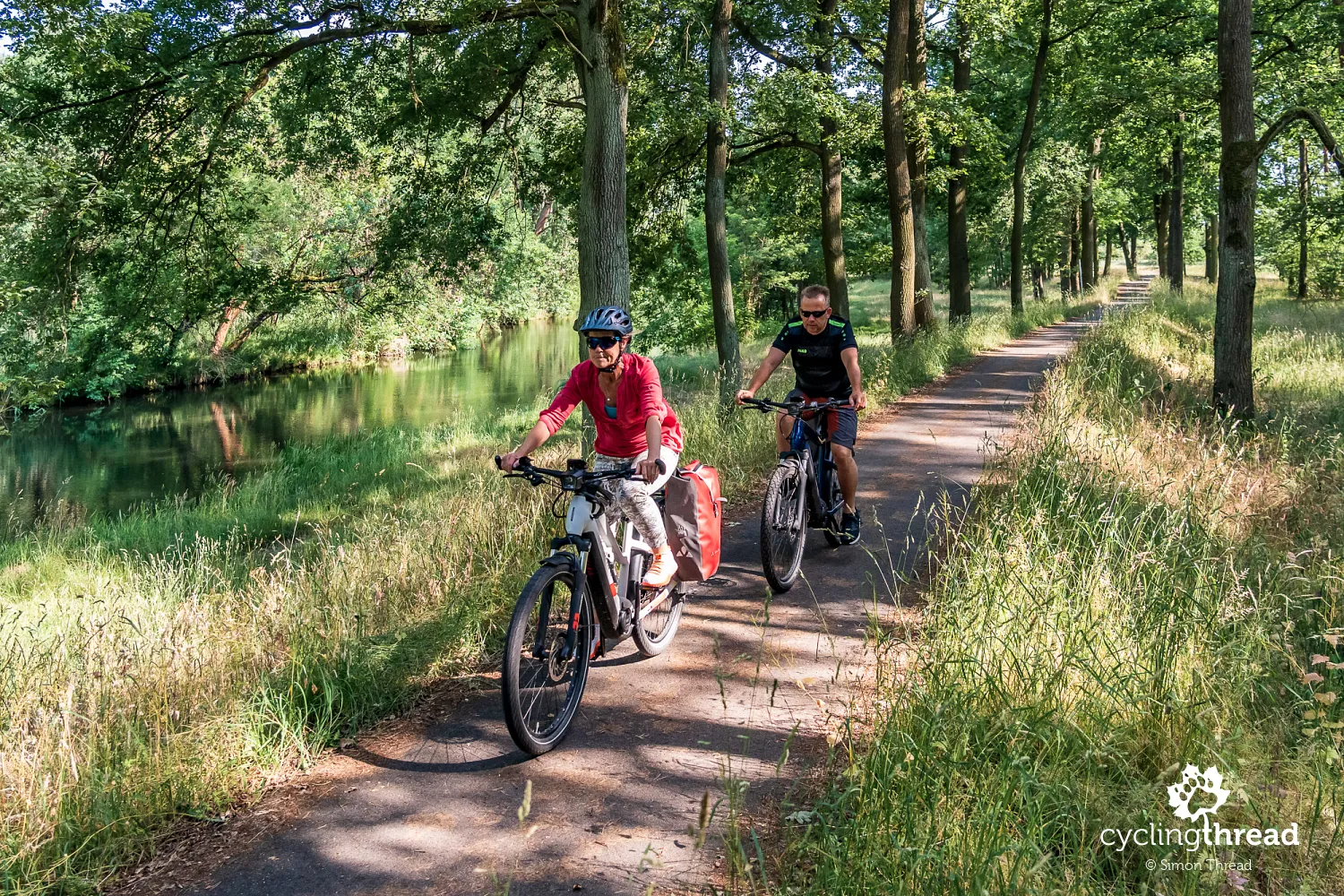
We had previously ridden through this part of Brandenburg on the Oder-Spree Tour cycling route - a multi-day loop leading through forests and lakes, alongside rivers and canals in the eastern part of the region. Tour Brandenburg crosses the Oder-Spree Tour twice, and one of the shared sections includes the distinctive wooden Fluthbrücke bridge over the Oder-Spree Canal near Fürstenwalde. Thanks to that, some of the landscapes and towns along the way were already familiar to me. Tour Brandenburg, however, offers a broader perspective than the local Oder-Spree Tour loop, allowing cyclists to experience Brandenburg from a wider and more varied point of view.
No complaints about Deutsche Bahn
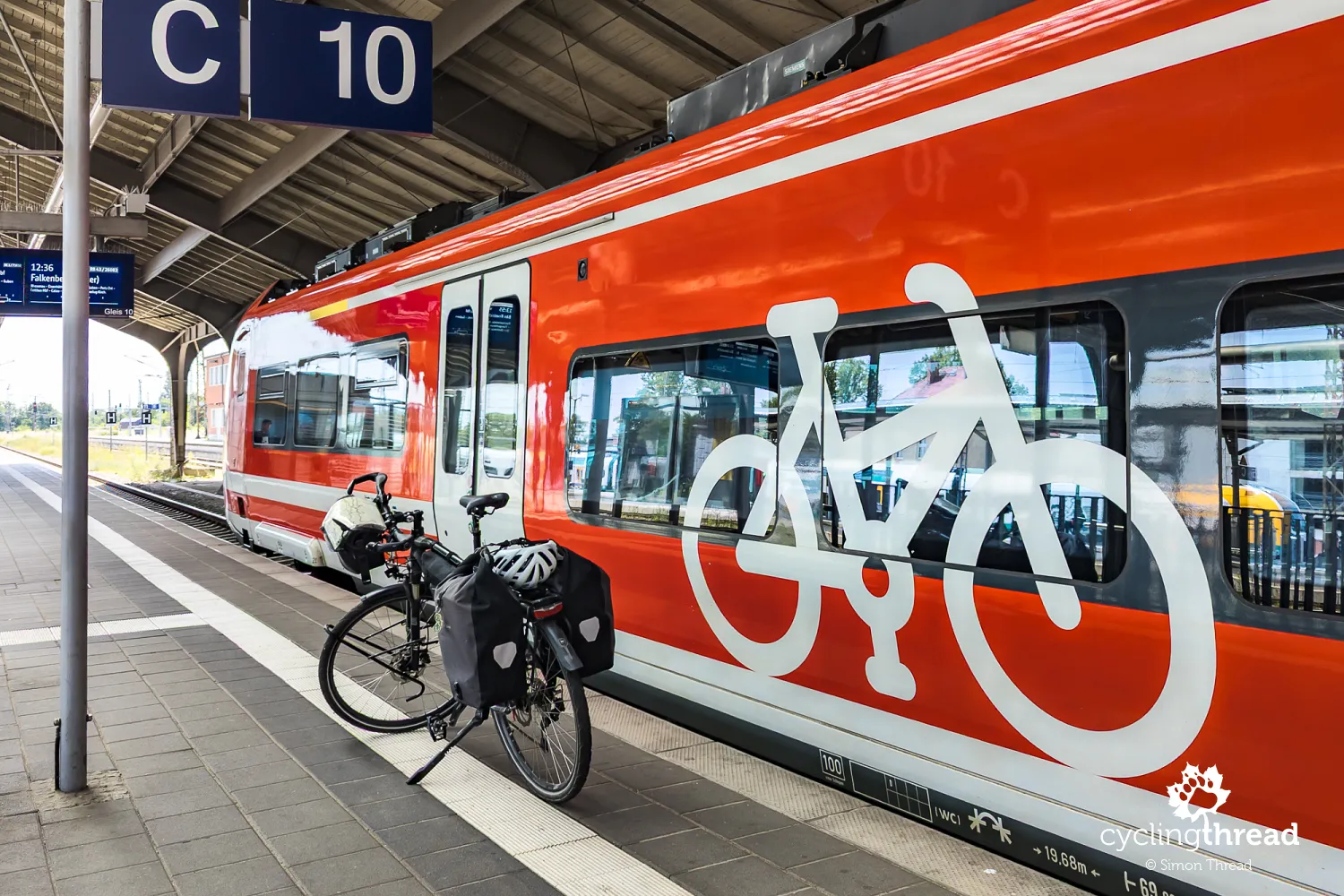
In Germany, it is not difficult to hear complaints about the quality of services provided by Deutsche Bahn, but my own experiences have been very positive for years, and this trip was no exception. I reached the starting point in Cottbus on a punctual regional train from Frankfurt an der Oder, where I easily found a spacious bicycle compartment. I was also pleased to take a photo of the huge bicycle pictogram displayed on the side of the train. I often point to this simple solution as an excellent example of good practice that makes travelling with a bicycle by rail much easier.
Starting Tour Brandenburg in Cottbus
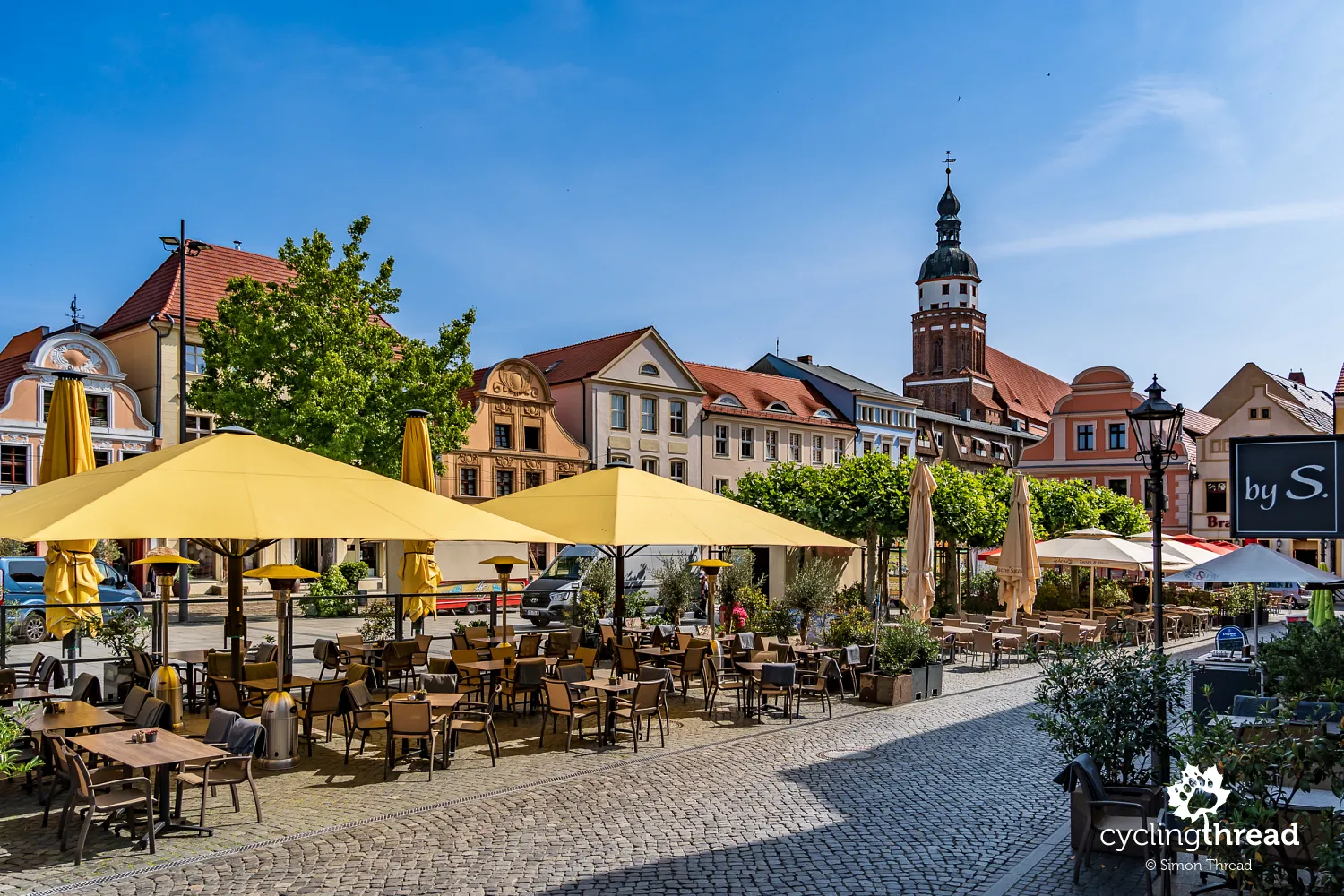
Cottbus is not a city that often appears on travel itineraries in Germany, yet it is well worth spending a few hours exploring. In the historic centre, the picturesque Gerberhäuser - former tanners' houses - have been preserved and are considered among the oldest buildings of their kind in Europe. A few kilometres from the centre lies Branitzer Park, one of Germany's most remarkable landscape parks, designed by Prince Hermann von Pückler-Muskau. Its most distinctive feature is an earthen pyramid built on an artificial island in the middle of a lake, which serves as the final resting place of the park's creator.
As always, I enjoyed the green riverside landscapes along the Spree, where a comfortable cycle path has been developed. Besides Tour Brandenburg, this corridor is also used by the Cucumber Cycle Route (Gurkenradweg), the Spree Cycle Route (Spreeradweg) and the Lower Lusatia Mining Route (Niederlausitzer Bergbautour), a large section of which we rode during one of our previous spring cycling trips. This extensive network of cycling routes is worth keeping in mind, as Cottbus is well connected and offers solid cycling infrastructure, making it a convenient base for exploring eastern and southern Brandenburg.
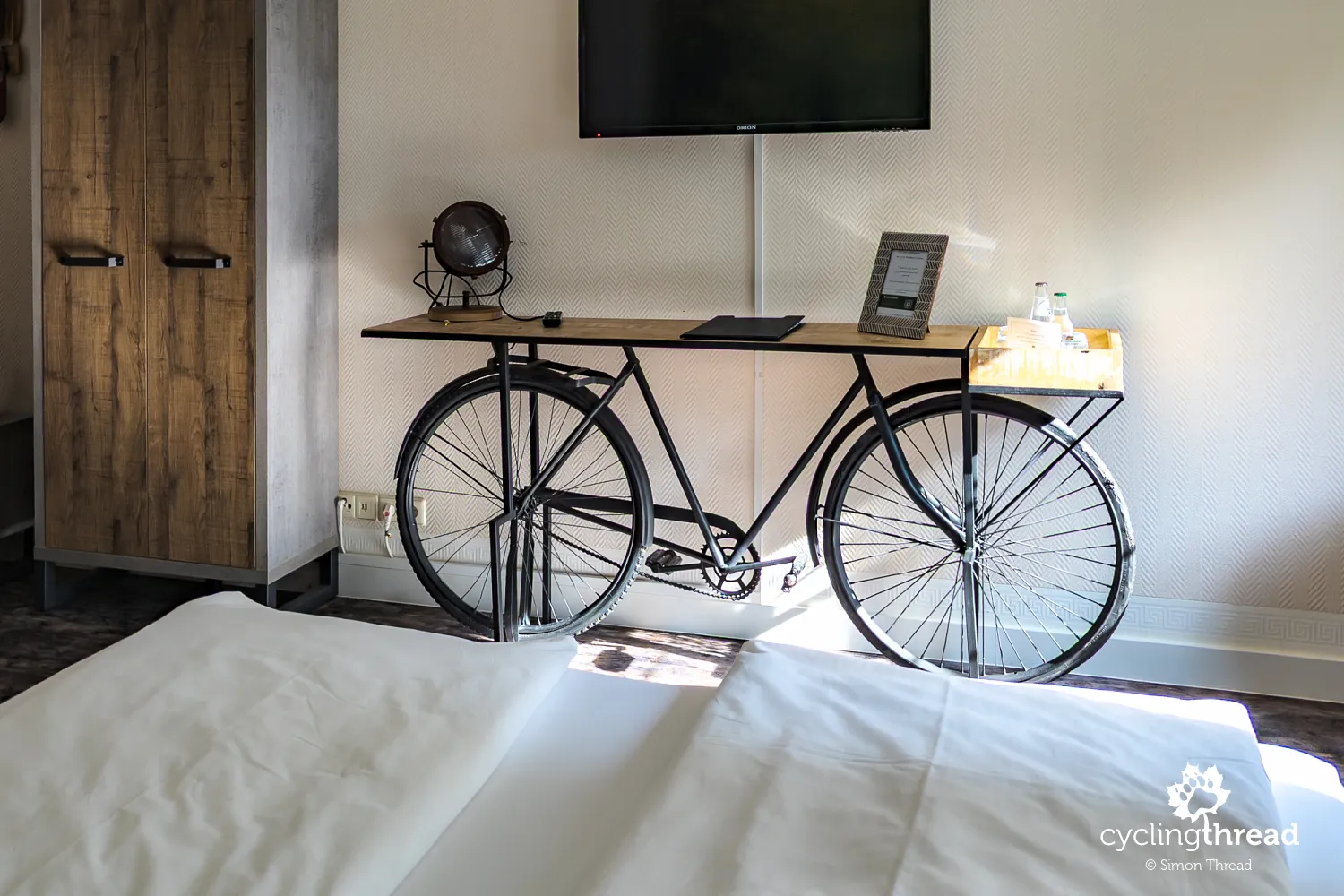
Cottbus can also be a good place to stay overnight. During this trip, I returned to the hotel where we had stayed many years ago while cycling through the Spreewald in rainy weather. Spree-Waldhotel in Cottbus is part of the Bett+Bike network - Germany's nationwide system of cyclist-friendly accommodation - and is one of those places where the cycling atmosphere is noticeable almost everywhere. In the spacious courtyard, surrounded by pine trees, there is a bicycle shelter and a secure bike storage room. Even some of the furniture reflects the cycling theme - several tables have been made from restored vintage bicycles. It is a small detail, but one that gives the place a distinctive character. More places to stay in Brandenburg can be found on a popular booking platform.
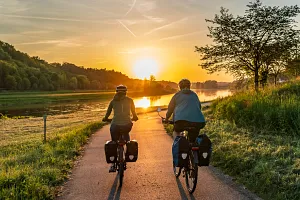
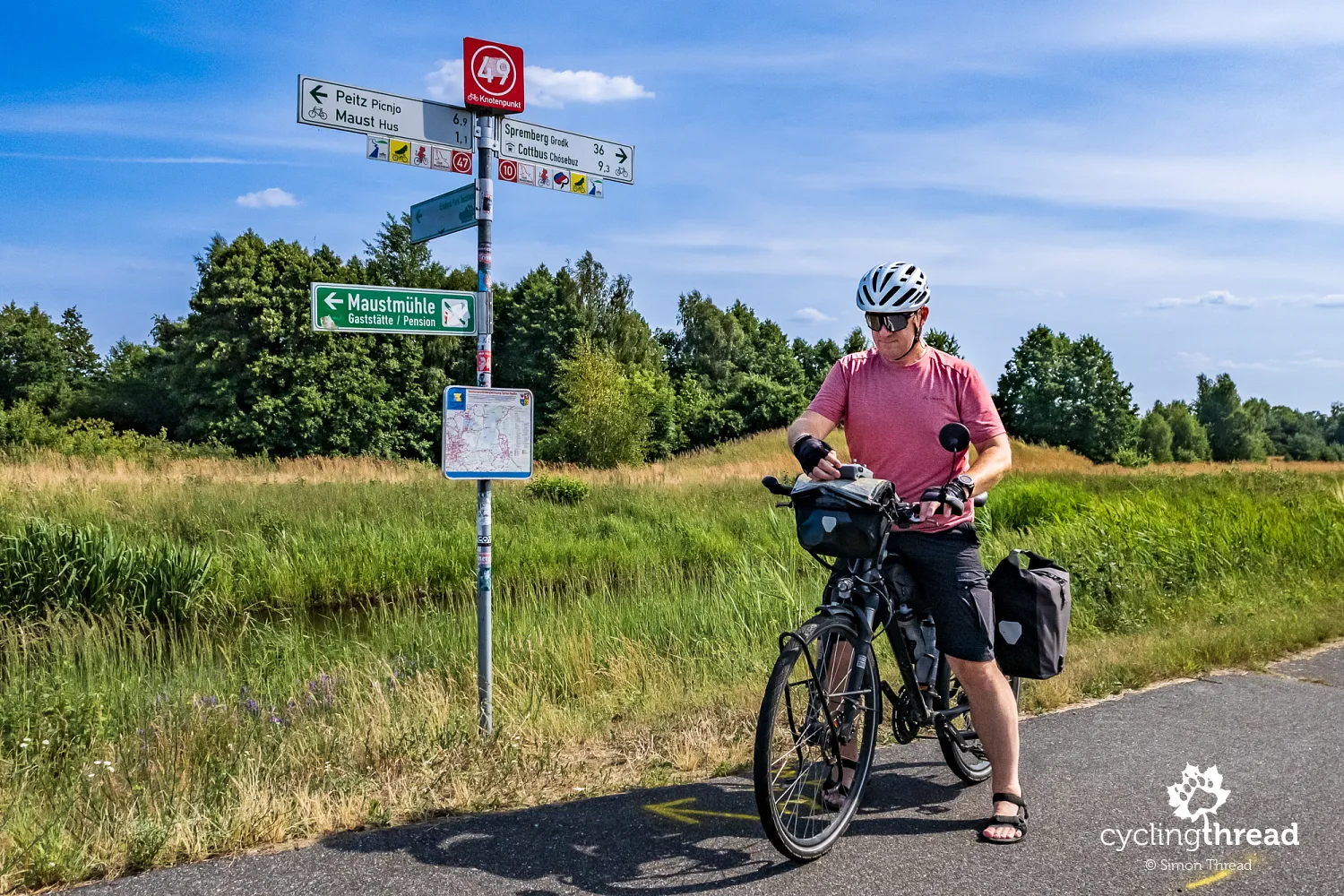
I leave Cottbus on the first day of my Tour Brandenburg journey using the same cycle path along the Spree. I particularly appreciate this type of local cycling highway, which allows riders to leave a city centre almost without interruptions. When travelling with panniers, it is a real pleasure to pedal calmly and safely along the river instead of stopping at one traffic light and junction after another. In Cottbus, the route soon climbs onto a small flood embankment along the Spree, providing a slightly elevated view of the surrounding landscape. Within just a few kilometres of leaving the centre, it becomes clear that the urban environment is fading behind, and the journey is entering the landscapes that are so characteristic of Brandenburg.
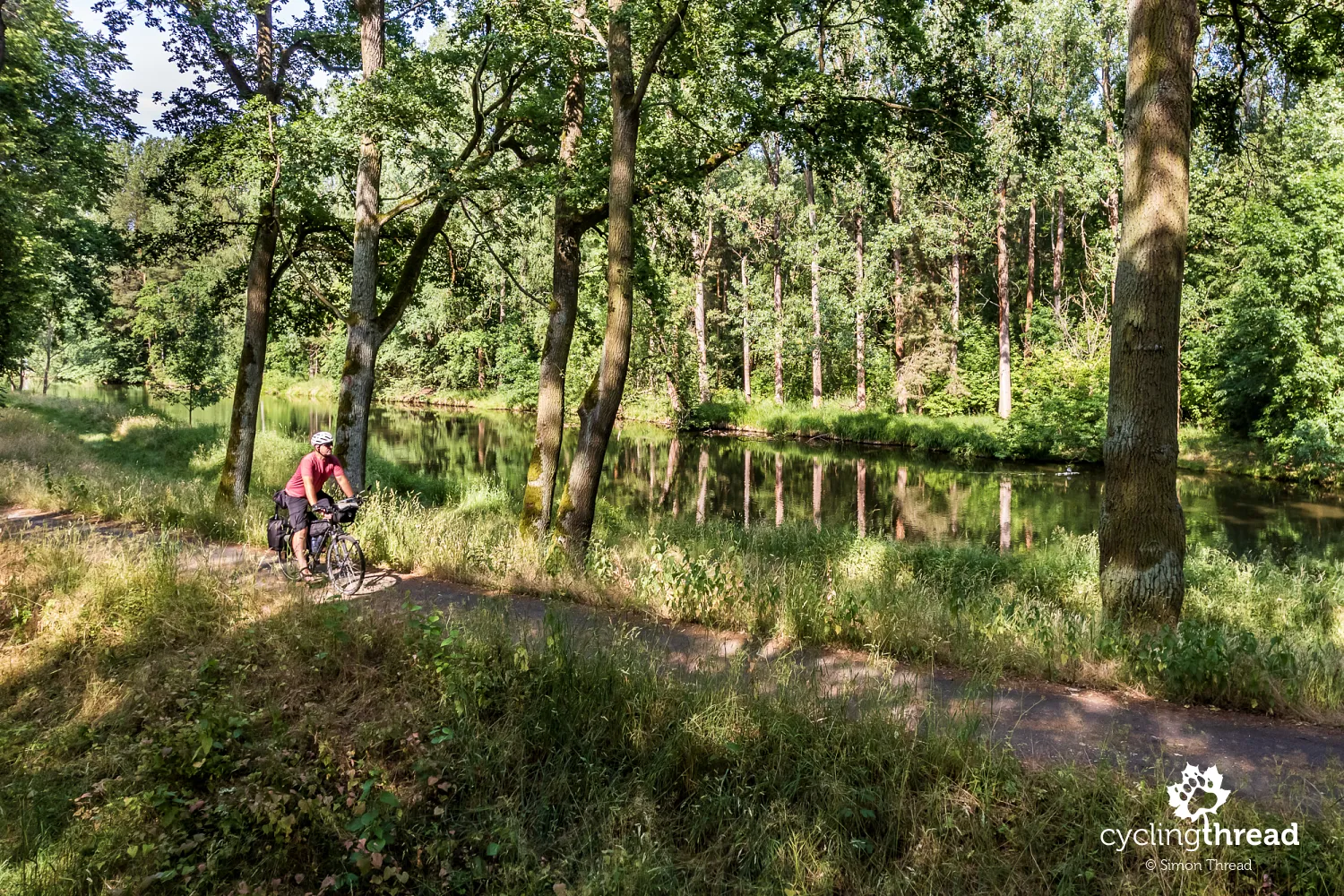
Cottbus See - one of Germany's newest lakes
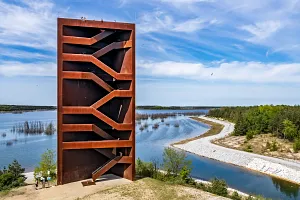
After just a few kilometres, Tour Brandenburg reaches the shores of Cottbus See - one of Germany's newest and largest artificial lakes. It is being created on the site of the former Cottbus-Nord open-cast lignite mine, which for decades played an important role in the economy of Lusatia. Following the end of mining operations, a large-scale land restoration project began, and the excavation site was gradually flooded. Today, new cycle paths, marinas, beaches and recreational facilities are being developed around the lake. It is one of the most visible examples of how former industrial landscapes are being transformed in modern Brandenburg, where former mining areas are increasingly finding new roles in tourism and nature conservation.
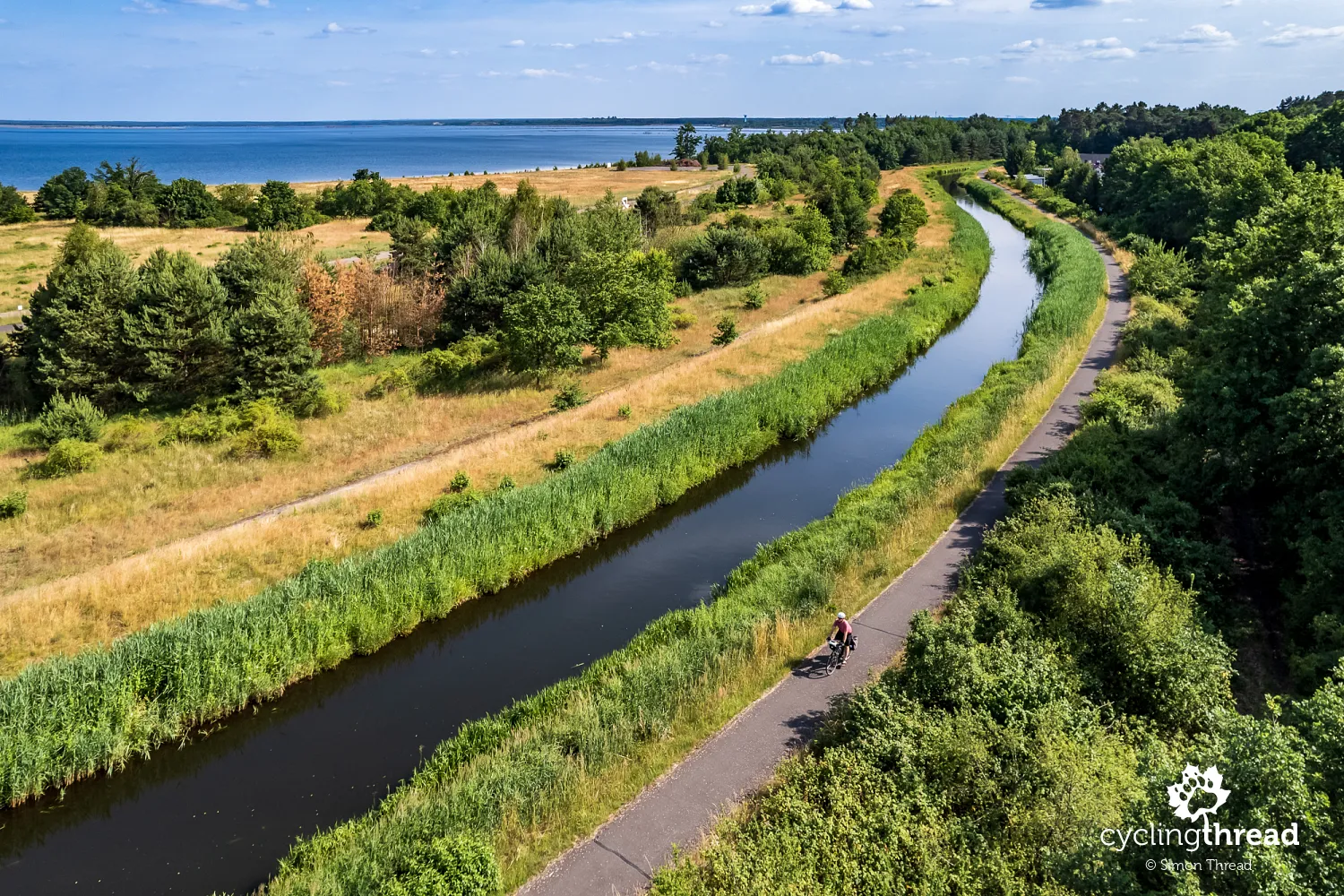
A landscape shaped by nature and industry
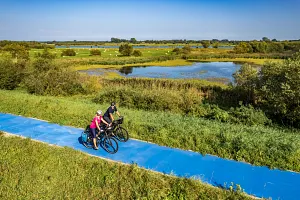
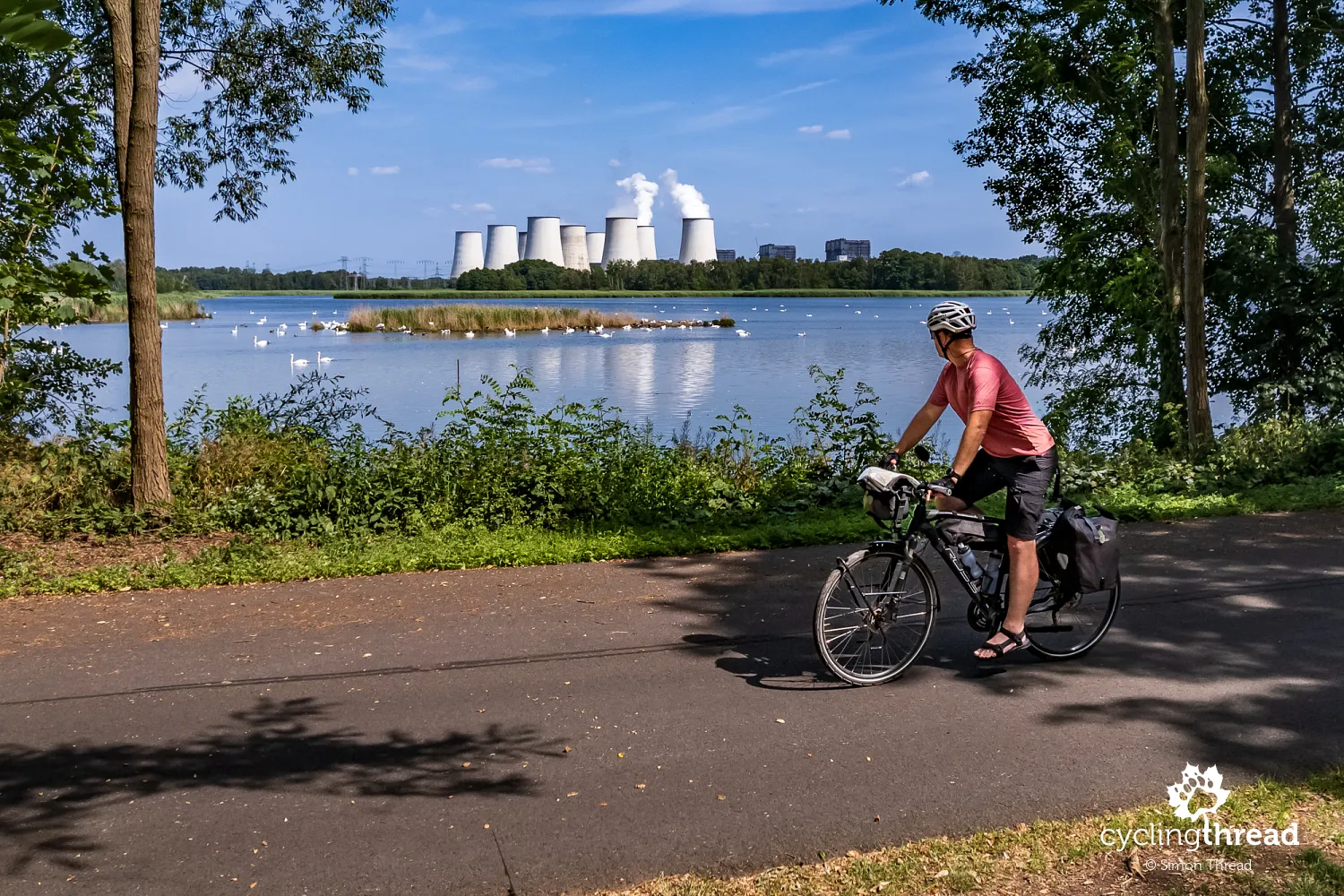
Just beyond Cottbus See, I reach a delightful cycle path running through the Peitz Fishponds - a vast complex of ponds, meadows and wetlands that ranks among the most valuable natural areas in this part of Brandenburg. The route follows narrow embankments between the water bodies, offering wide views across the landscape and excellent opportunities to observe water birds. What makes this area particularly distinctive is the contrast between nature and the region's industrial past. On the right-hand horizon, the enormous cooling towers of the Jänschwalde power station - one of the largest coal-fired power plants in eastern Germany - remain visible for a long stretch of the ride. The sight of peaceful ponds, reed beds and dozens of swans in the foreground, with the massive power station rising in the distance, illustrates how closely two seemingly different worlds coexist here - nature and the industrial heritage of Lusatia.
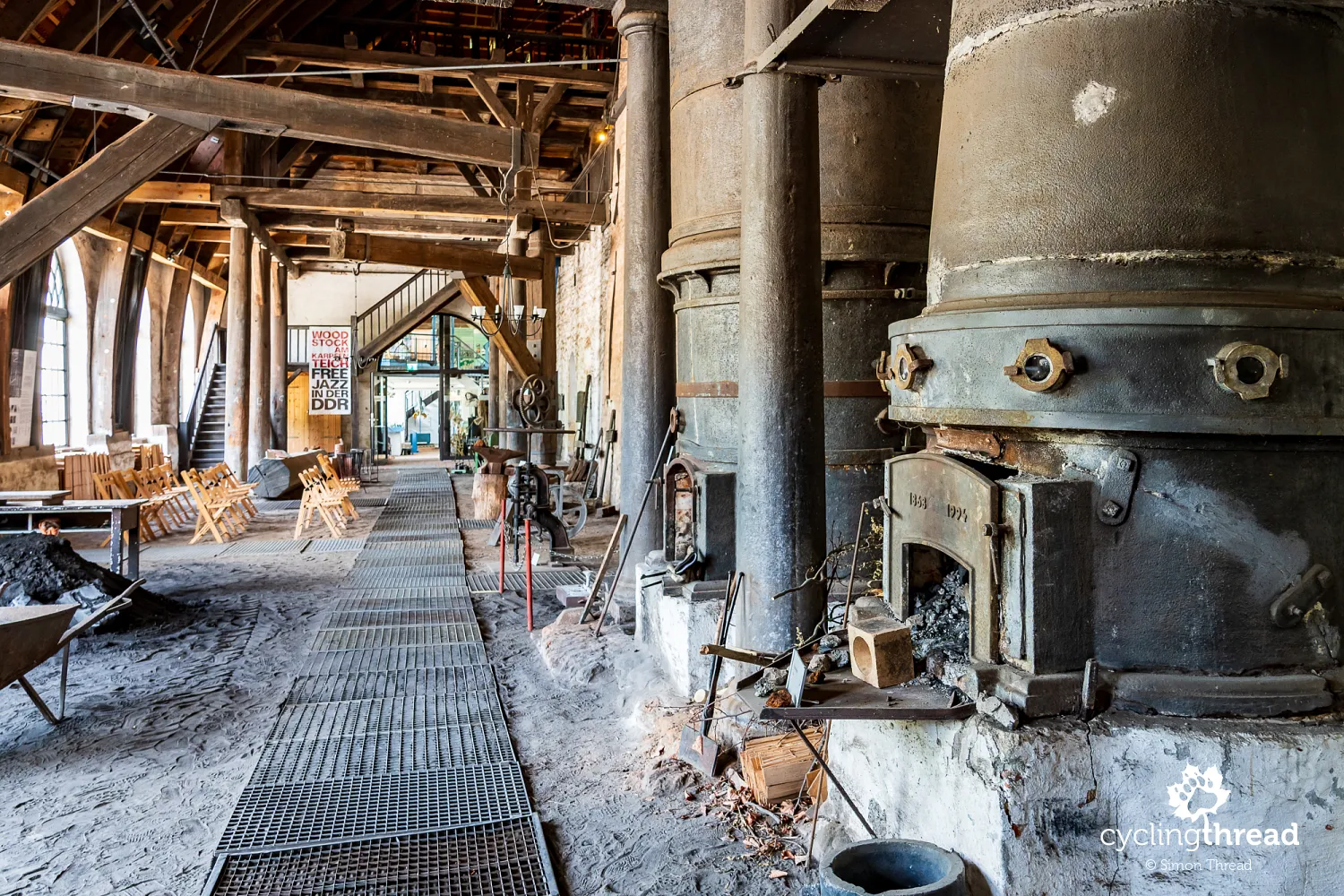
At the northern end of this wonderful ride through the Peitz Fishponds stands the Hütten- und Fischereimuseum. The museum tells the story of the two industries that shaped the area for centuries - iron production and fish farming linked to the extensive pond system. Its compact exhibition introduces visitors to the history of local ironworks, traditional carp farming and the importance of both industries to the development of the town. It is also impossible to miss the distinctive brick chimneys of the former ironworks, which dominate the surrounding landscape and remain one of Peitz's most recognisable landmarks. One of the buildings within the former industrial complex now houses a small cyclist-friendly guesthouse.
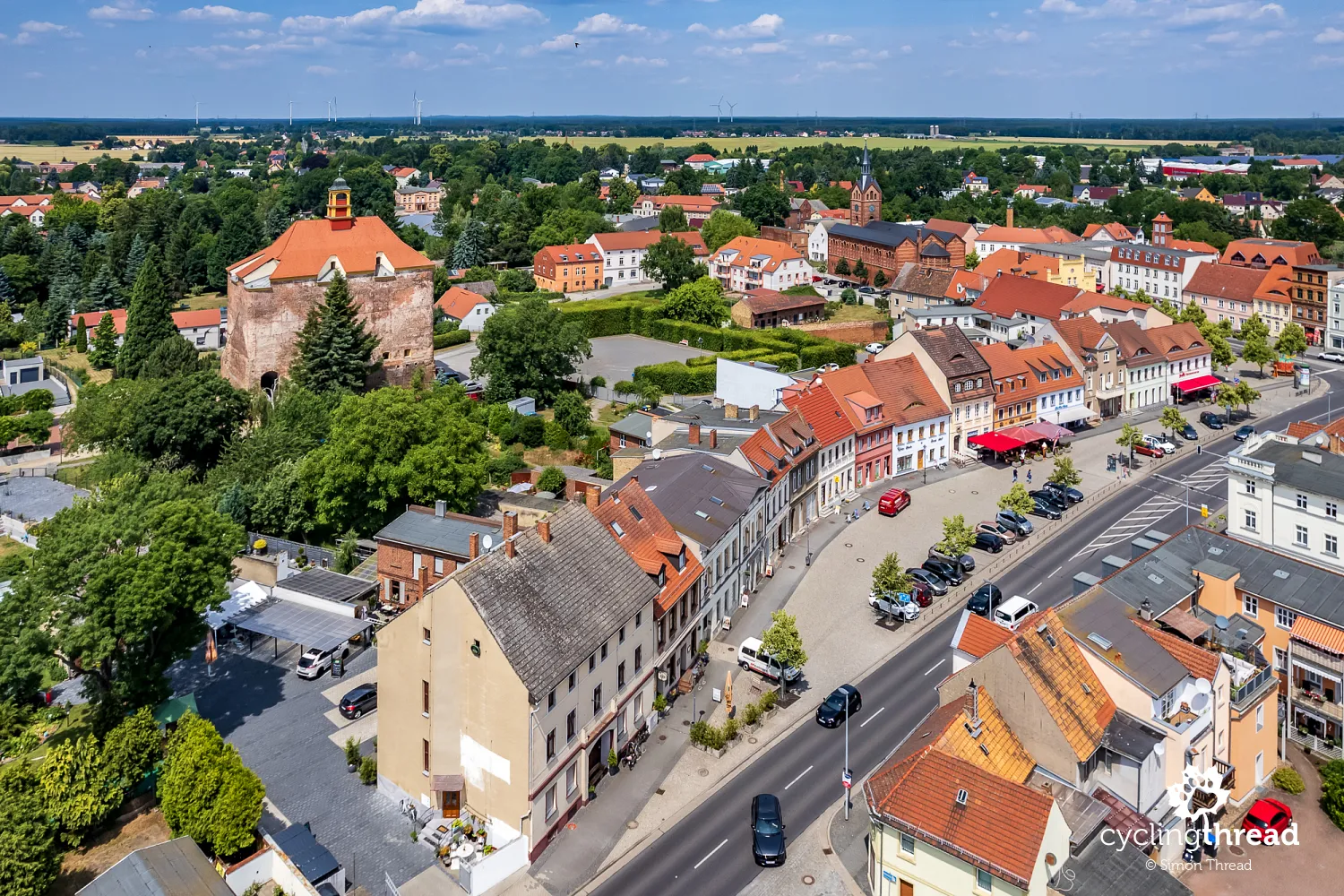
Peitz itself is a natural continuation of the landscape through which the route passes among the surrounding ponds. For centuries, the town prospered thanks to fishing and water management, and traces of that history remain clearly visible today. Rising above the town is the distinctive tower of the former castle, a reminder of one of the most important fortifications in Lower Lusatia. Medieval Peitz developed around this stronghold, which controlled nearby trade routes and economic areas. Several historic buildings have survived in the town centre, recalling the period when Peitz played an important administrative and defensive role in the region.
Comfortable cycling through Brandenburg
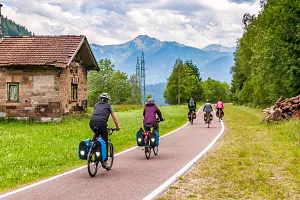
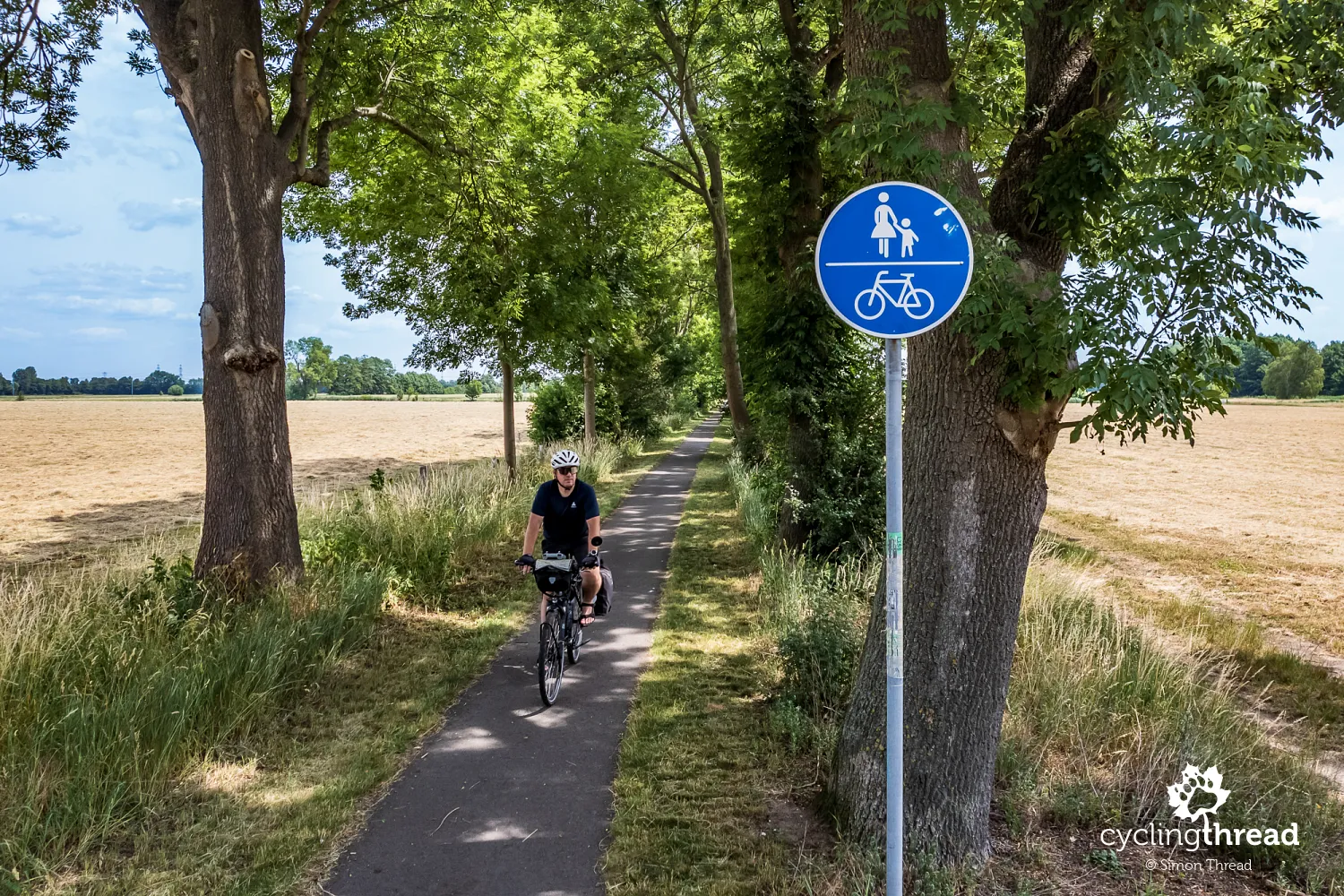
Beyond Peitz, Tour Brandenburg returns to what I enjoy most about cycling in Brandenburg - peaceful and comfortable travel. The route follows mainly asphalt cycle paths and local roads with very little motor traffic. Even where it uses the regular road network, riding remains relaxed and requires little attention to passing vehicles. The kilometres pass through forests, fields and small villages, allowing cyclists to focus more on the landscape than on traffic conditions. Among the memories I brought home from this section was a cycle path beyond Peitz running through a long avenue of old ash trees. It is a simple and typically Brandenburg landscape - perhaps not spectacular, but a perfect example of how enjoyable cycling in Germany can be.
Two of Brandenburg's most beautiful landscapes
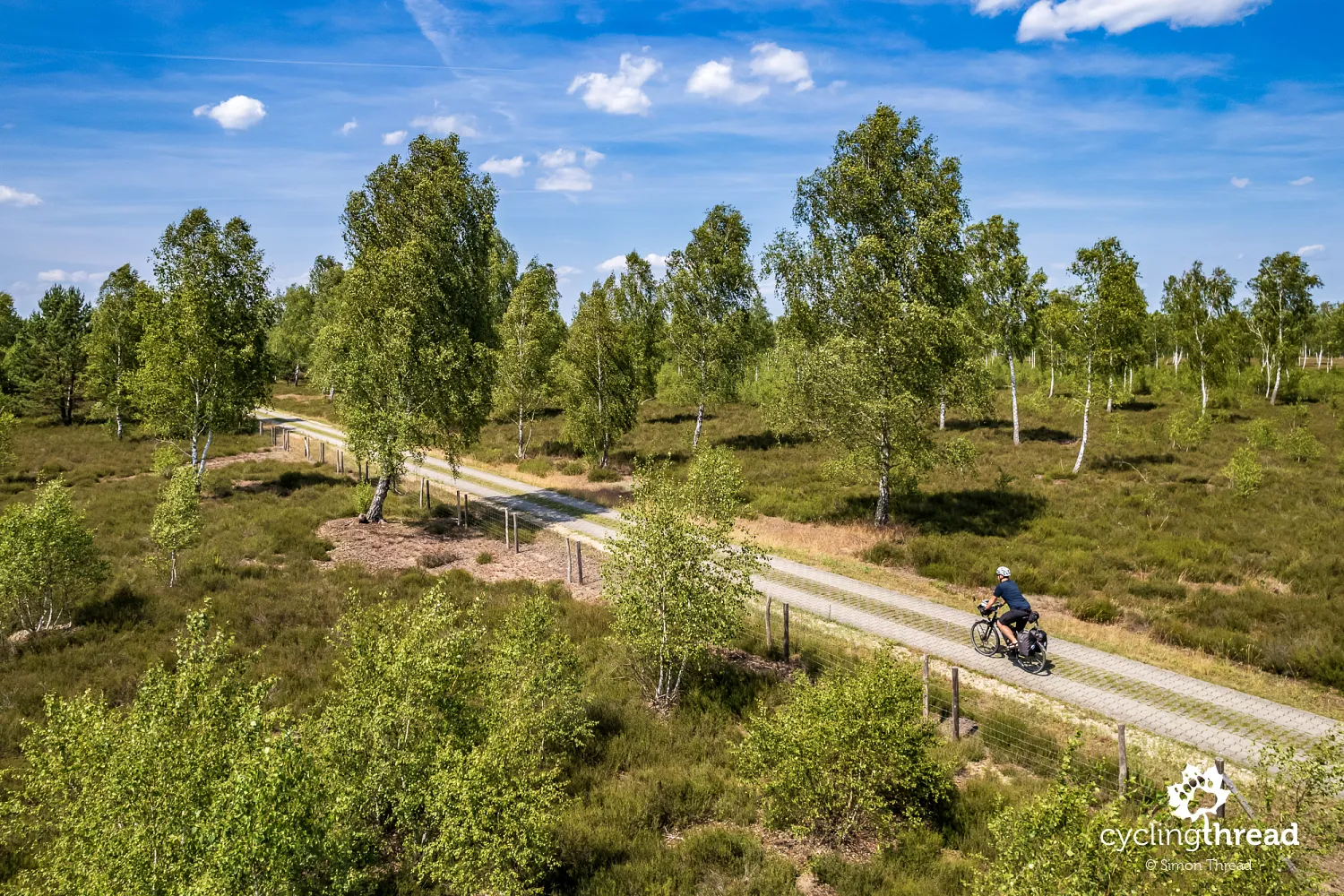
After the peaceful landscapes around Peitz, the route heads towards Lieberoser Heide, one of the largest natural areas in Brandenburg. For decades, this land was used by the military, which paradoxically protected it from intensive development and economic transformation. Today, the area is dominated by vast forests, heathlands and open spaces, while the small number of roads and settlements makes it one of the most remote sections of the entire route. While cycling here, it is easy to feel as though civilisation has been left many kilometres behind.
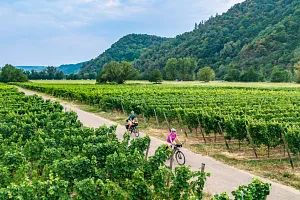
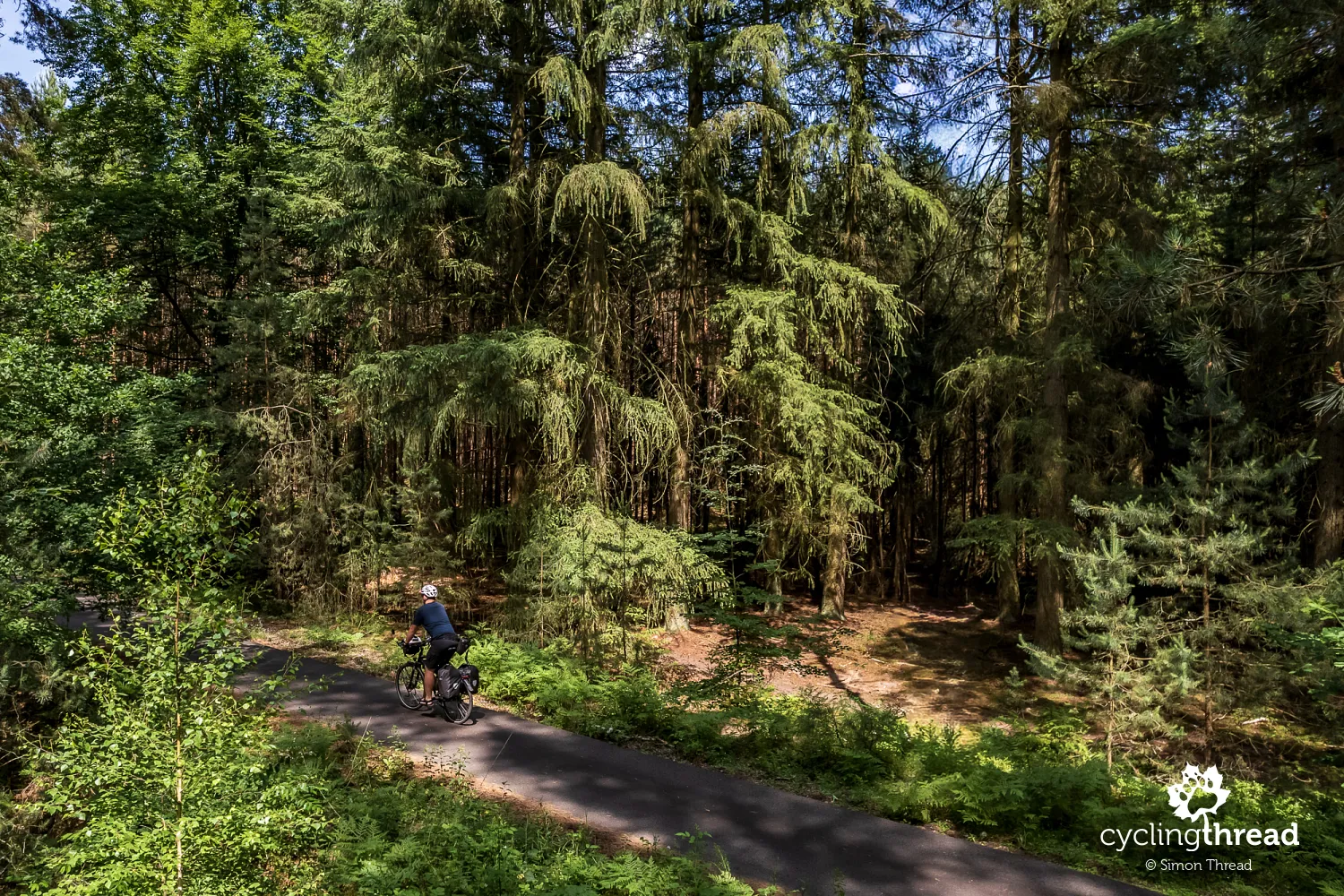
Several dozen kilometres later, Tour Brandenburg reaches Schlaubetal, the picturesque valley of the Schlaube River. It is one of the most scenic corners of Brandenburg, although the route passes through only a small part of the region. Over thousands of years, the river has shaped a landscape of forests, lakes and gentle hills that stands in clear contrast to Brandenburg's usually flat terrain. We had already discovered Schlaubetal during an earlier trip on the Oder-Spree Tour route, where the sections along the Schlaube were among the most enjoyable parts of the entire journey.
Beeskow for a longer break
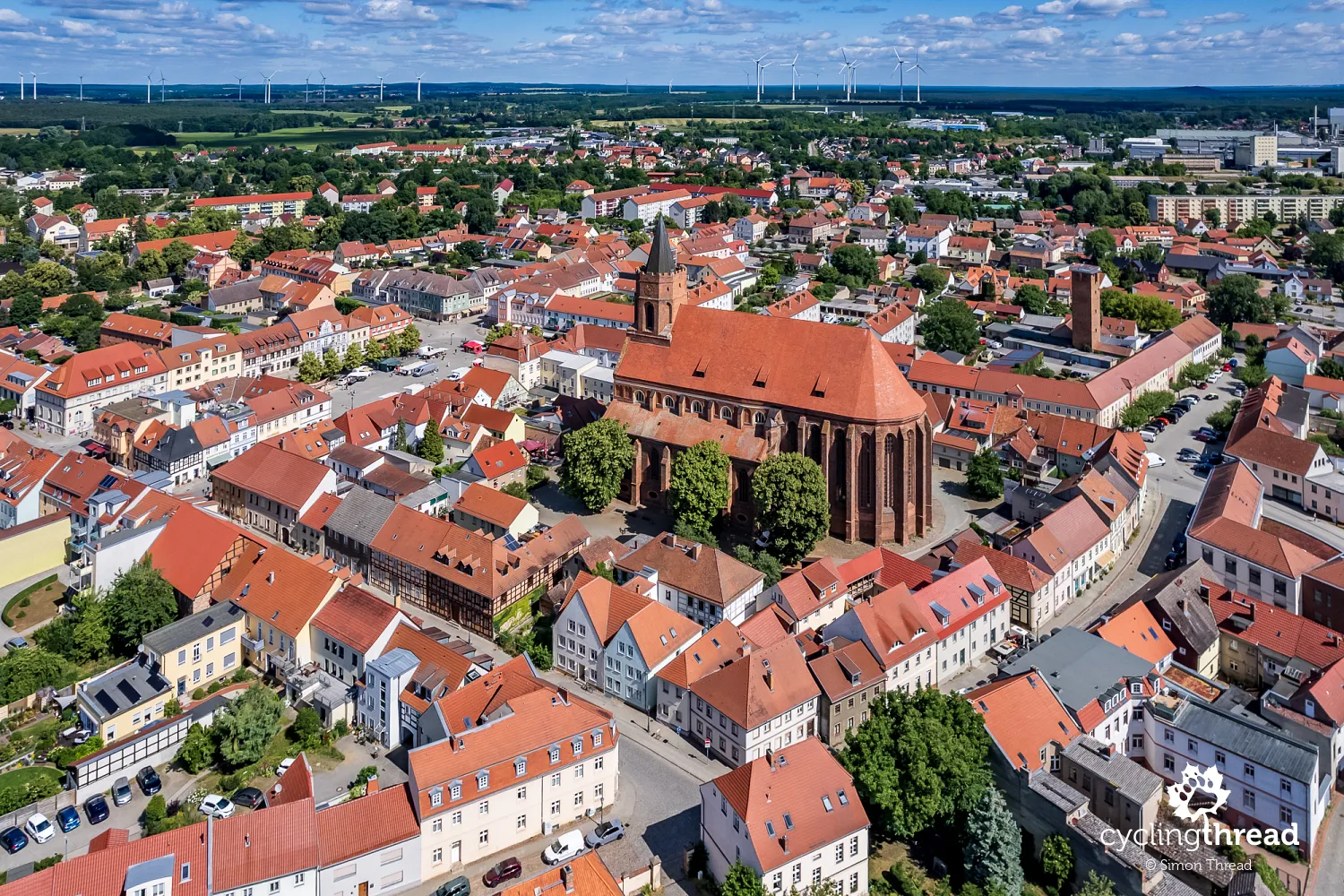
Beeskow is one of the larger towns on the eastern section of Tour Brandenburg and a good place for a longer break. The massive tower of St Mary's Church dominates the historic centre and is visible from a considerable distance before entering the town. Slightly lower down, on the banks of the Spree, stands the medieval castle, which for centuries played an important administrative and defensive role in the region. While exploring the town, it is also worth walking down to the river, where an excellent Italian pizzeria can be found. After many kilometres spent among forests and lakes, Beeskow offers a pleasant change of scenery and a welcome touch of urban life.
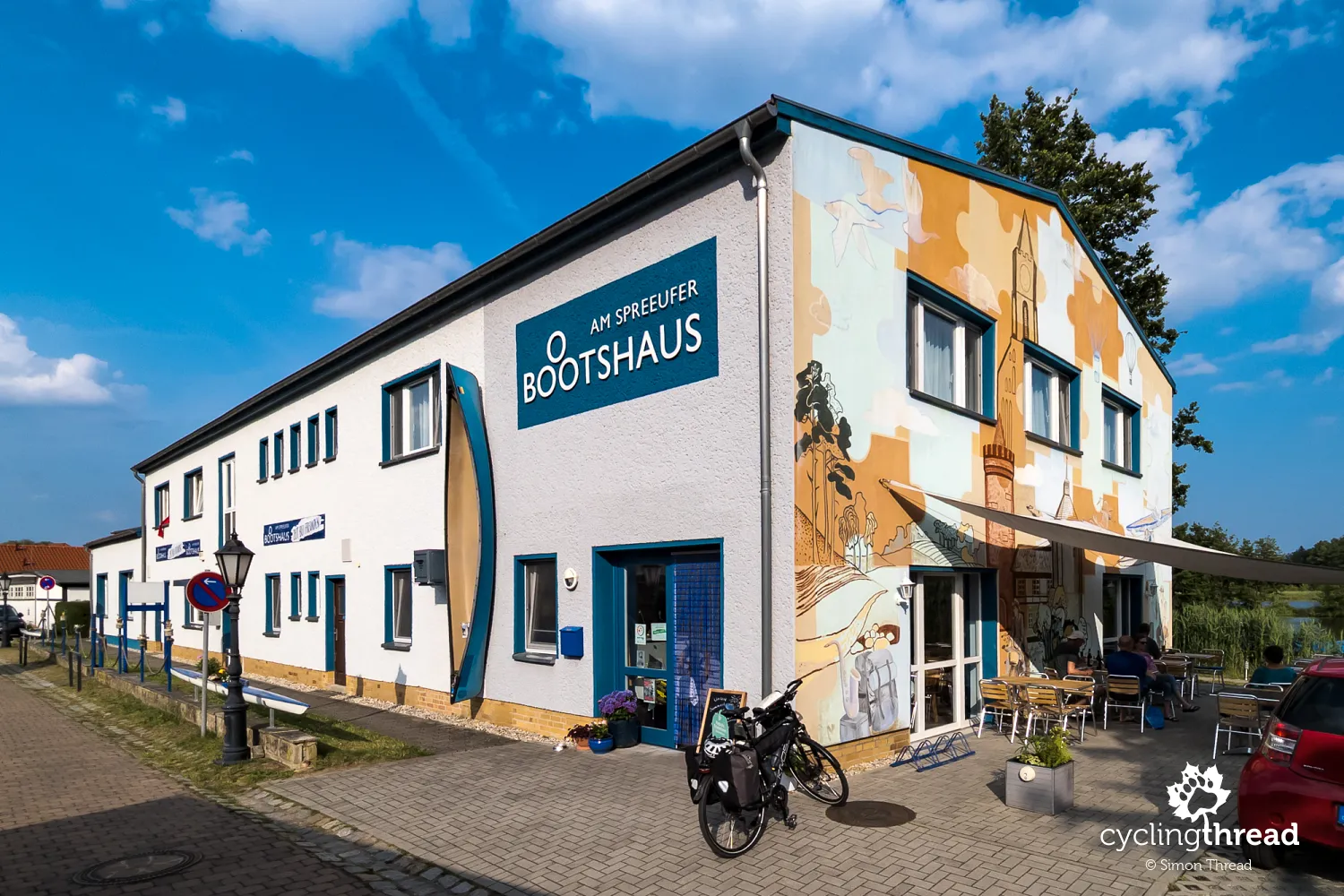
Beeskow is also home to an excellent example of a practical overnight stop. On the banks of the Spree stands Bootshaus Beeskow, a simple, well-maintained and affordable guesthouse. The standard is roughly equivalent to a one- or two-star property, but the combination of cleanliness, reasonable prices and a very good location makes it an excellent choice for a cycling trip. The guesthouse is also popular with boaters - a small marina is located directly below the windows, offering moorings for boats and kayaks. These are the kinds of places I appreciate most - without unnecessary attractions or ambitions of luxury, but providing exactly what is needed after a long day in the saddle.
The first cyclist on a new cycle path
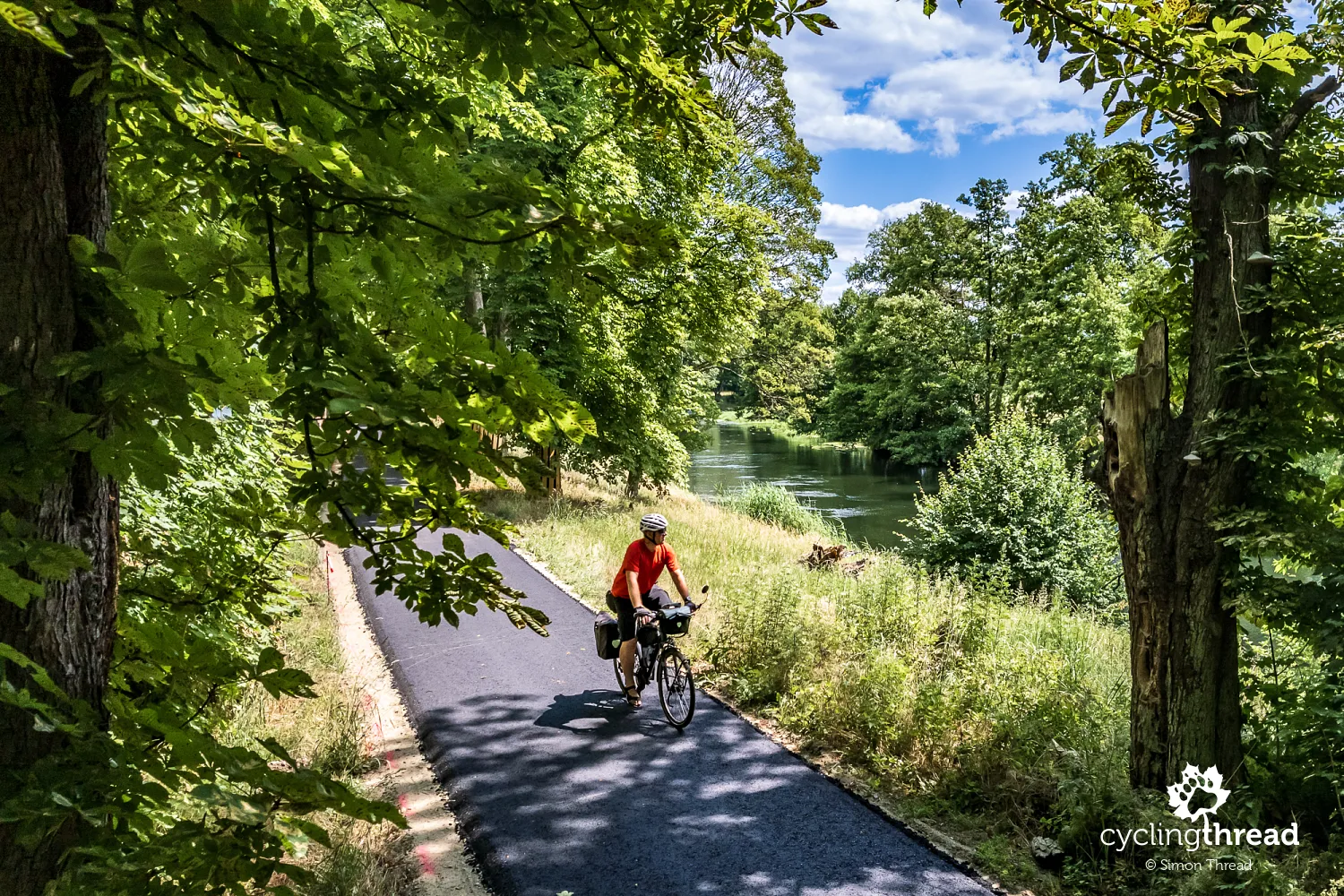
The following day begins with another excellent section of cycling route, this time laid with freshly completed asphalt. It runs from the small village of Neubrück to the large Kersdorf Lock, a place I immediately recognised from our earlier ride on the Oder-Spree Tour. I was one of the first - perhaps even the very first - cyclists to ride this section after the construction work had been completed. The light-coloured base layer beneath the new asphalt still contrasted with its deep black surface, while the tree trunks along the route remained protected by wooden barriers left behind by the construction crews.
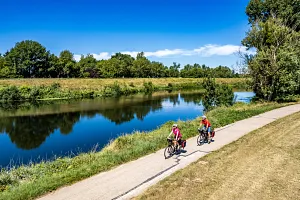
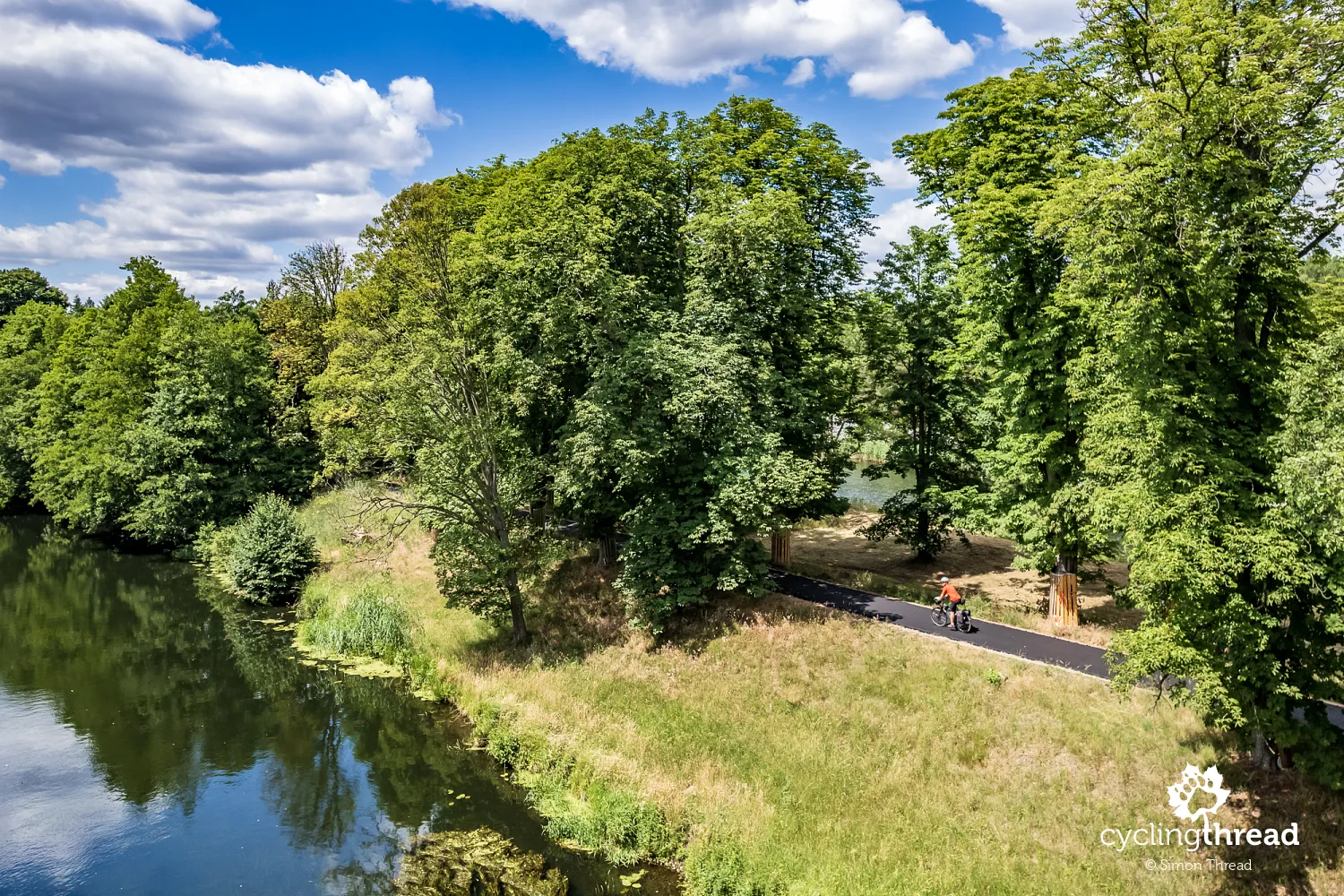
As during my previous visit, I was struck by the difference in water levels between the Spree River and the Oder-Spree Canal, which are connected here by the newly surfaced cycle path. The Spree flows on the left side of the route, while the canal runs along the right. The difference in elevation between the two waterways is managed by Kersdorf Lock, one of the most important hydraulic structures on the entire canal. The Oder-Spree Canal was built in the late nineteenth century as part of a water connection linking Berlin with the Oder River and the Baltic ports. The lock enables vessels to overcome a difference in water level of several metres, and its scale reflects the historical importance of this waterway for inland navigation. Even today, both leisure craft and larger commercial vessels can be seen passing through.
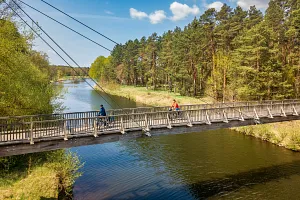
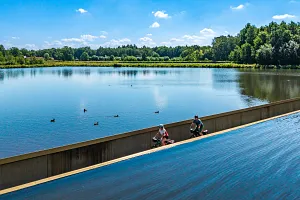
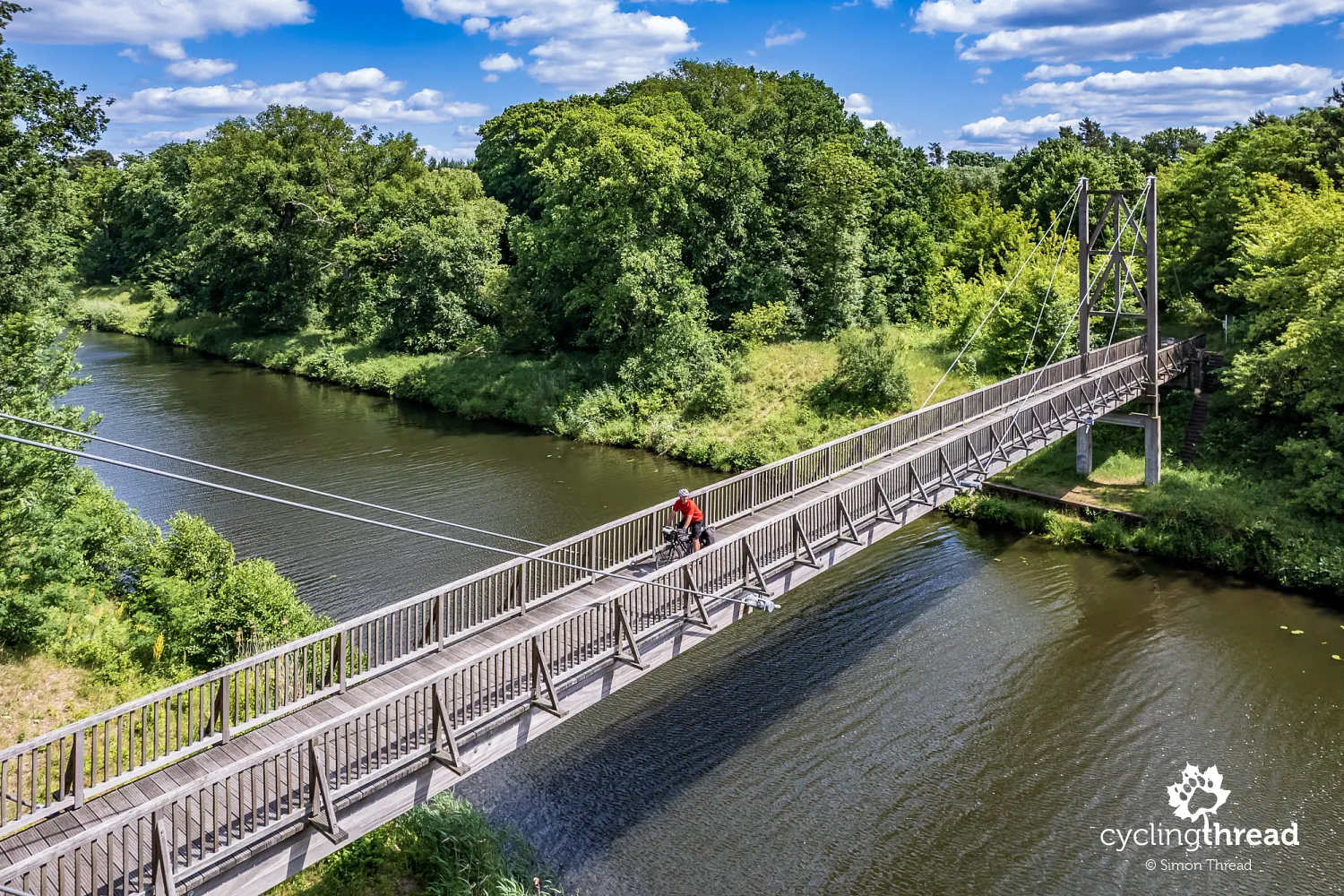
A few hundred metres further on, the route reaches Fluthbrücke, one of the most distinctive landmarks along Tour Brandenburg and an excellent spot for a souvenir photograph. The wooden bridge spanning the Oder-Spree Canal blends perfectly into the surrounding forest landscape. From the top, there are fine views of the broad canal and the contrast between this carefully engineered waterway and the more natural scenery of the nearby forests and wetlands. It was on the cycle path leading to the bridge that we encountered a group of German road cyclists during our earlier trip on the Oder-Spree Tour. With such a smooth surface and so little motor traffic, it is hard to imagine a better place for training.
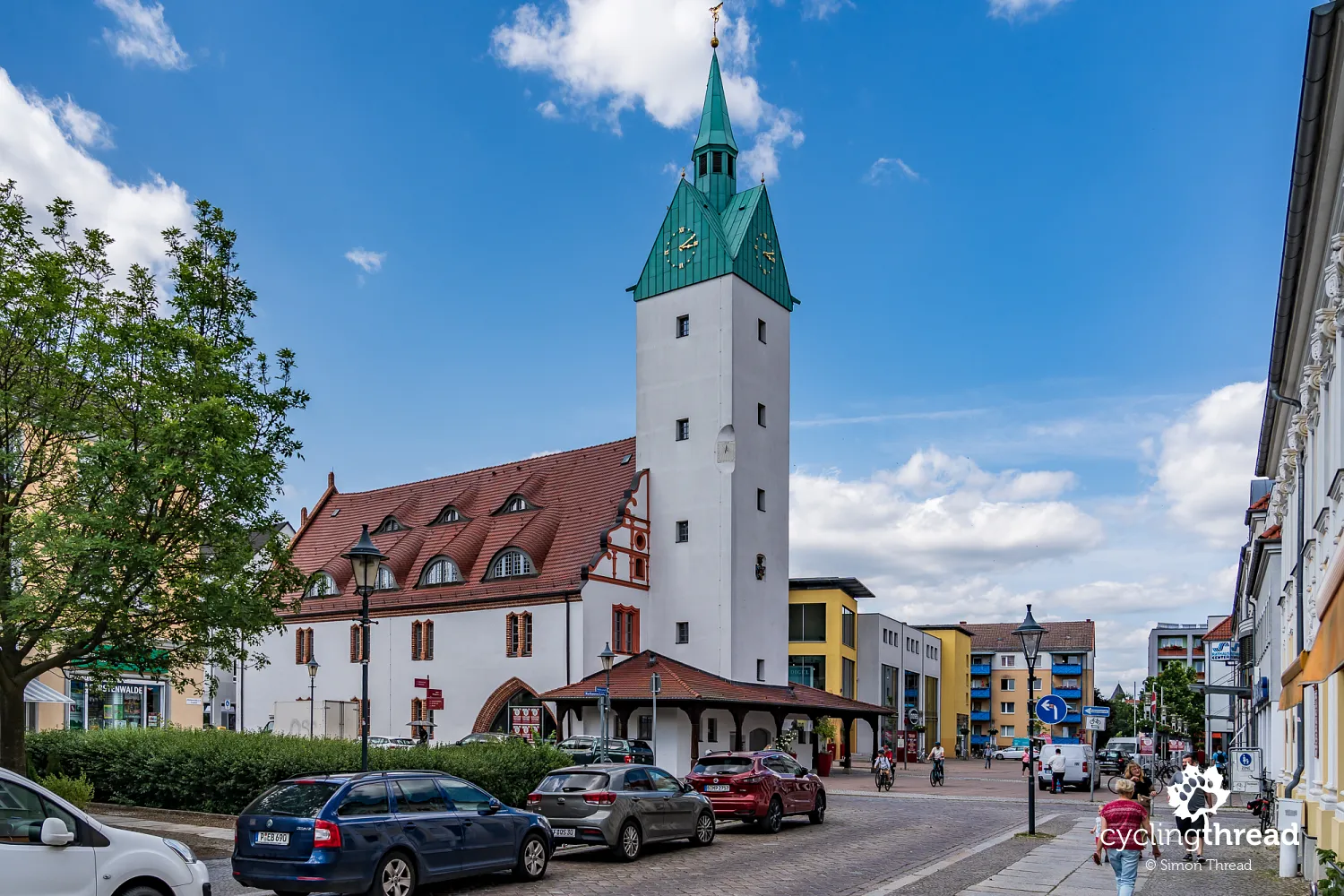
Fürstenwalde is one of the largest towns along the eastern section of Tour Brandenburg and a convenient place for a longer break. Situated on the banks of the Spree, it has played an important role in regional trade and transport for centuries. The most prominent landmark is St Mary's Cathedral, whose tower rises above the surrounding buildings and remains visible from a considerable distance. Although parts of the town were damaged during the Second World War, the centre has retained several historic buildings and pleasant public spaces that invite visitors to slow down for a while. Thanks to its location on the Spree and the Berlin-Frankfurt (Oder) transport corridor, Fürstenwalde developed into one of the most important economic and administrative centres in eastern Brandenburg, serving as a regional hub for trade, crafts and later industry.
Fahrradstraße - bicycle street in Brandenburg
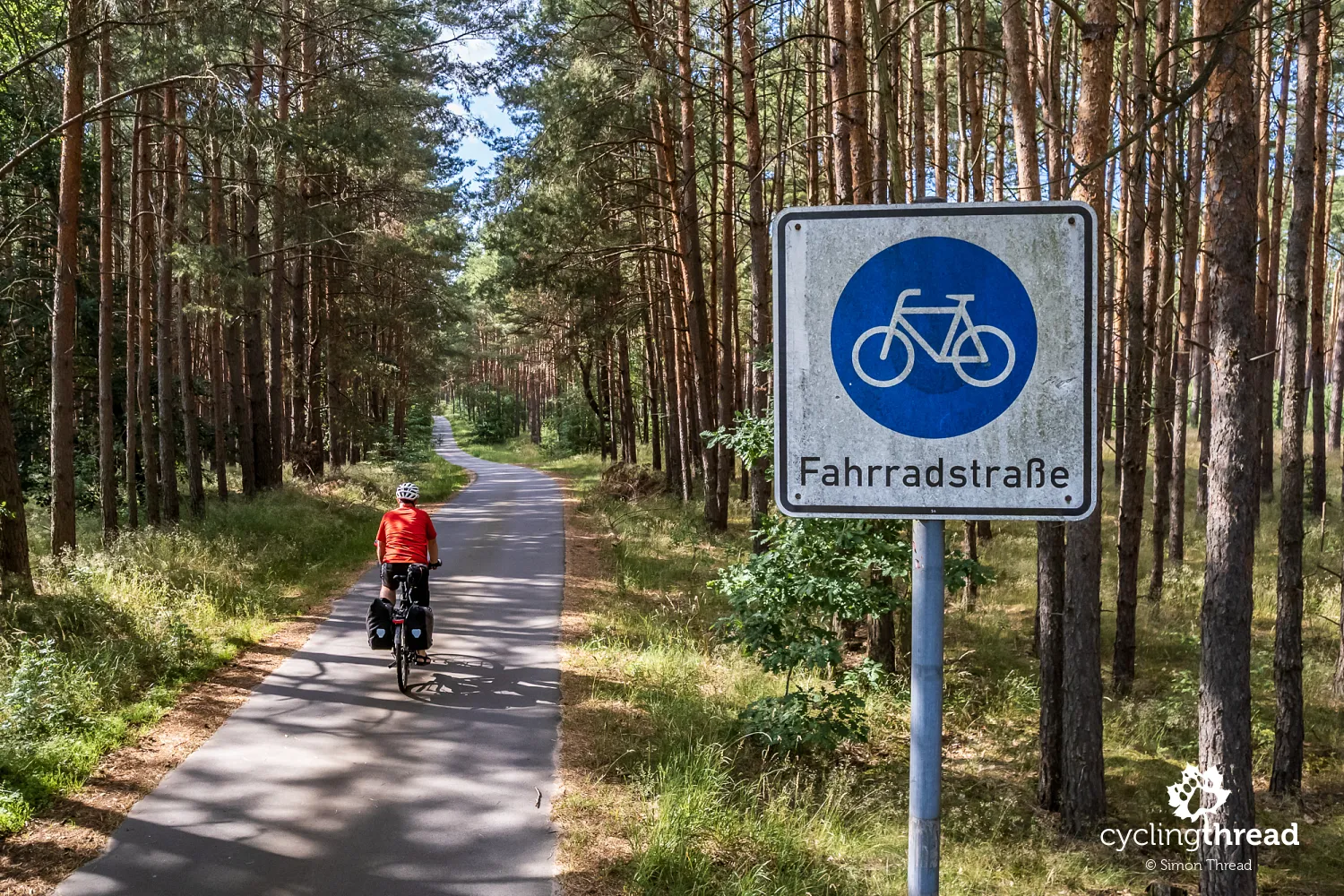
One of the features that contributes to the comfort of cycling in Brandenburg is the Fahrradstraße, or bicycle street. On these roads, cyclists have priority, while motor traffic is permitted only where additional signs allow it. In practice, this means a calmer riding experience, fewer vehicles and a different approach to road design, where the bicycle becomes the most important mode of transport. Although Fahrradstraßen are most commonly found in German towns and cities, they are increasingly being introduced on routes connecting settlements or leading to popular tourist attractions. During my journey through Brandenburg, I used such roads many times, and they always provided a pleasant alternative to ordinary streets.
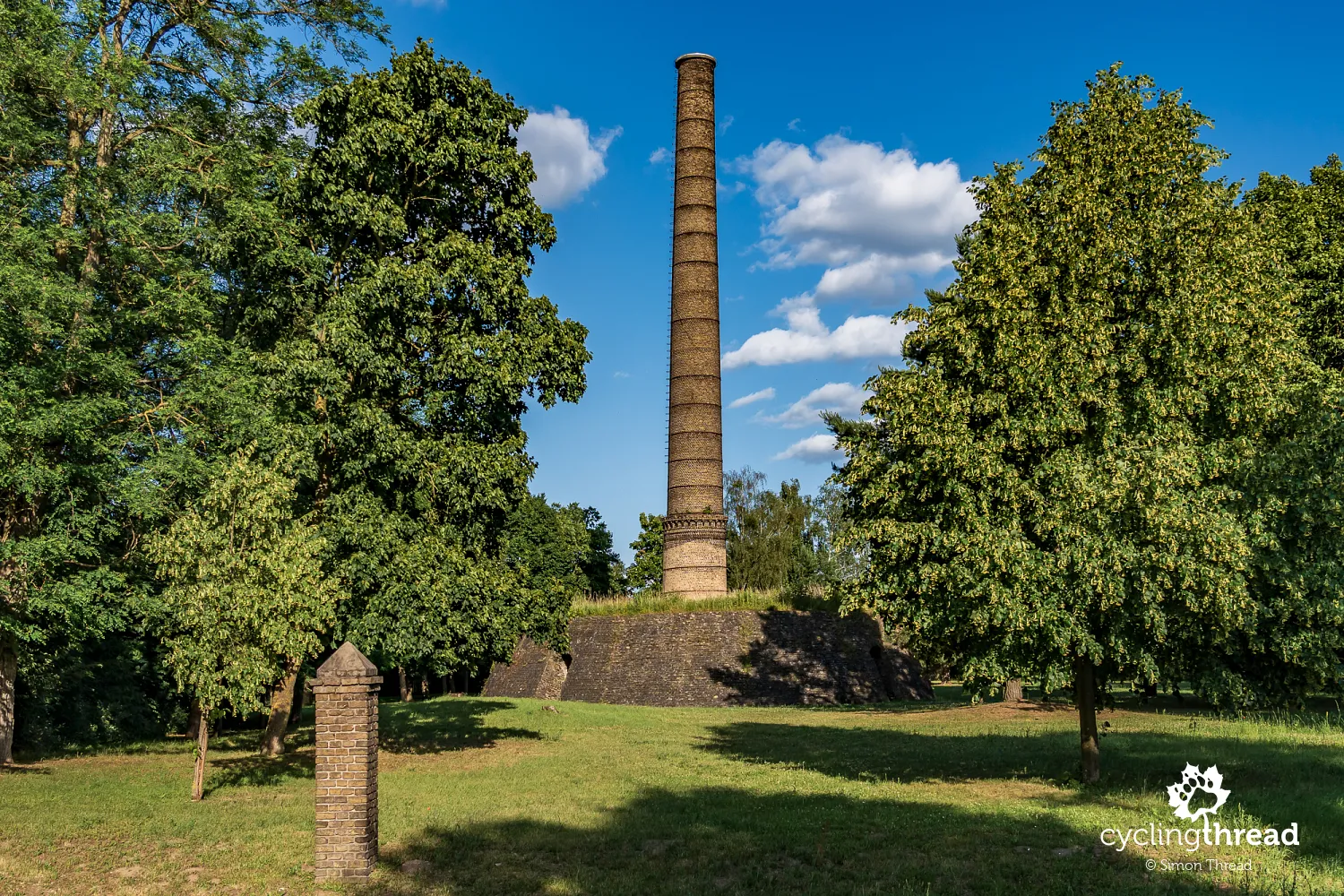
Located directly along the route, Lichtenower Ziegelei is the remnant of a brickworks that operated here from the late nineteenth century. The factory was established where high-quality clay deposits were found, supplying bricks that were used, among other places, in Berlin. Its location on the Oder-Spree Canal was crucial, allowing raw materials and finished products to be transported cheaply by water. Parts of the former industrial complex have survived, including the distinctive Hoffmann ring kiln, one of the most important inventions of the nineteenth-century ceramics industry. Its continuous firing process significantly increased production efficiency while reducing costs. During its peak years, the brickworks was one of many similar facilities supplying building materials to the rapidly expanding metropolis of Berlin.
Strausberg marked the end of another day on Tour Brandenburg. Situated beside a long and narrow lake, the town has served for centuries as an important trading centre on the route leading to Berlin. Its medieval layout remains clearly visible, with a market square, sections of the old town walls and St Mary's and St Nicholas' Church, whose tower dominates the surrounding skyline. Walking through the centre, it is easy to notice that Strausberg is also a popular leisure destination for residents of the German capital. The lake, promenades and recreational areas give the town the character of a local resort, while it remains fully integrated into the well-developed transport network of the Berlin metropolitan region.
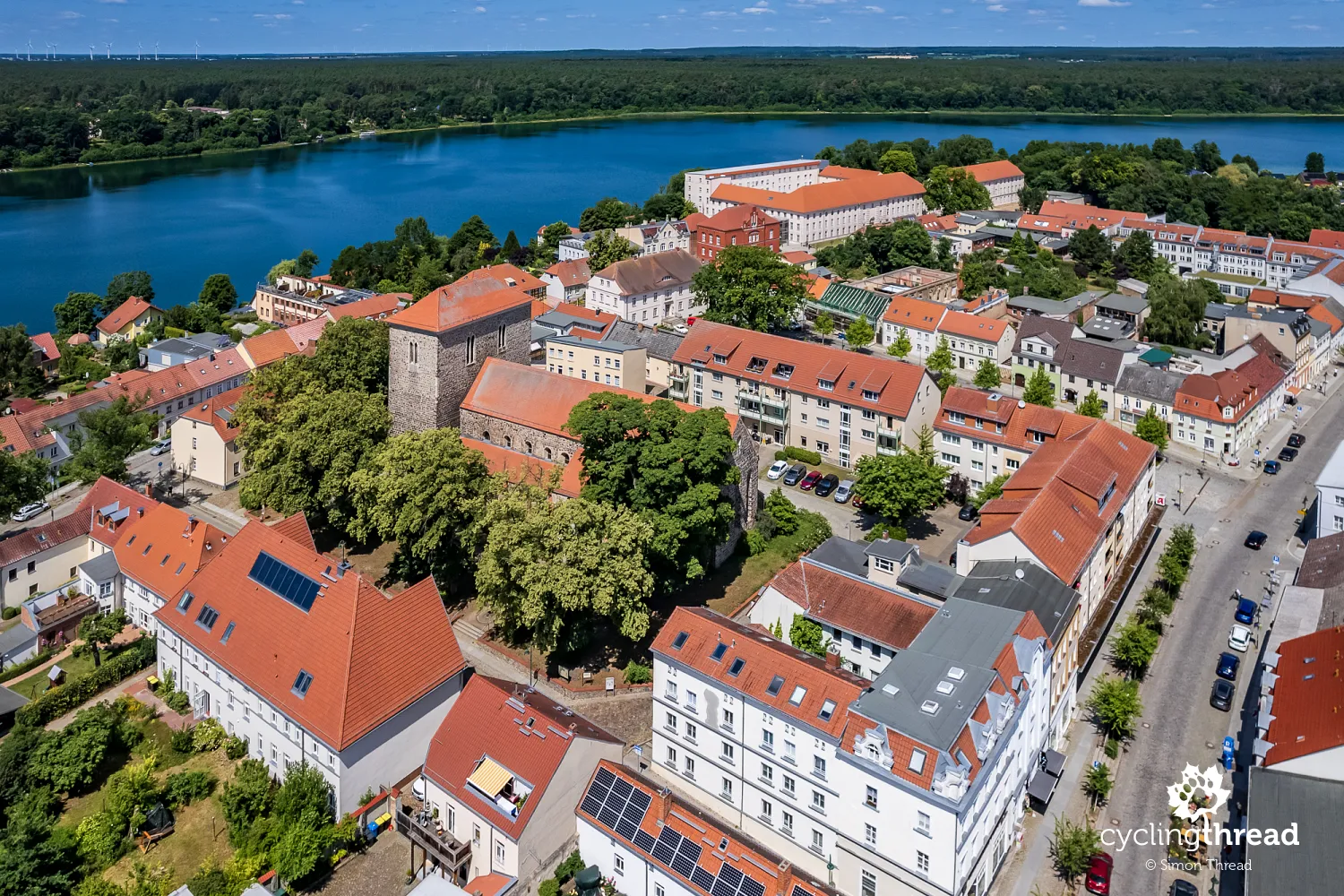
Beyond Strausberg, the landscape begins to change slightly. Among the gentle hills that precede the Oder Valley, the route passes through the small village of Protzel before reaching Reichenow Palace - one of the most interesting manor residences along the eastern section of Tour Brandenburg. The neoclassical palace is surrounded by an extensive nineteenth-century landscape park whose original layout has been preserved to this day. Over the years, the building has served various purposes, and following a comprehensive renovation it was converted into a hotel. For cyclists, however, it is above all a pleasant place for a short break, as the park and palace grounds provide a striking contrast to the forests, fields and small settlements that dominate the earlier sections of the route.
Former Oder riverbed near Wriezen
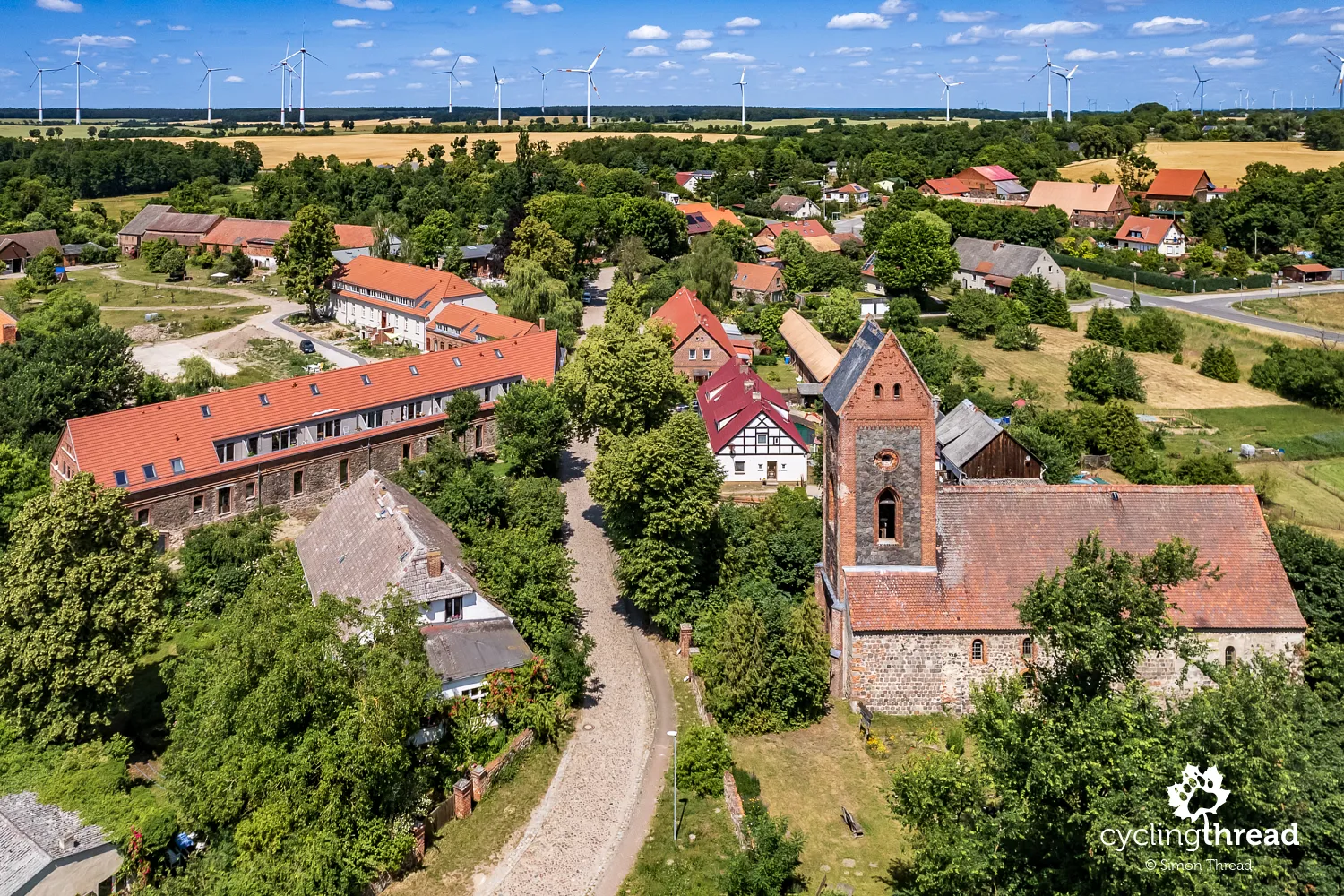
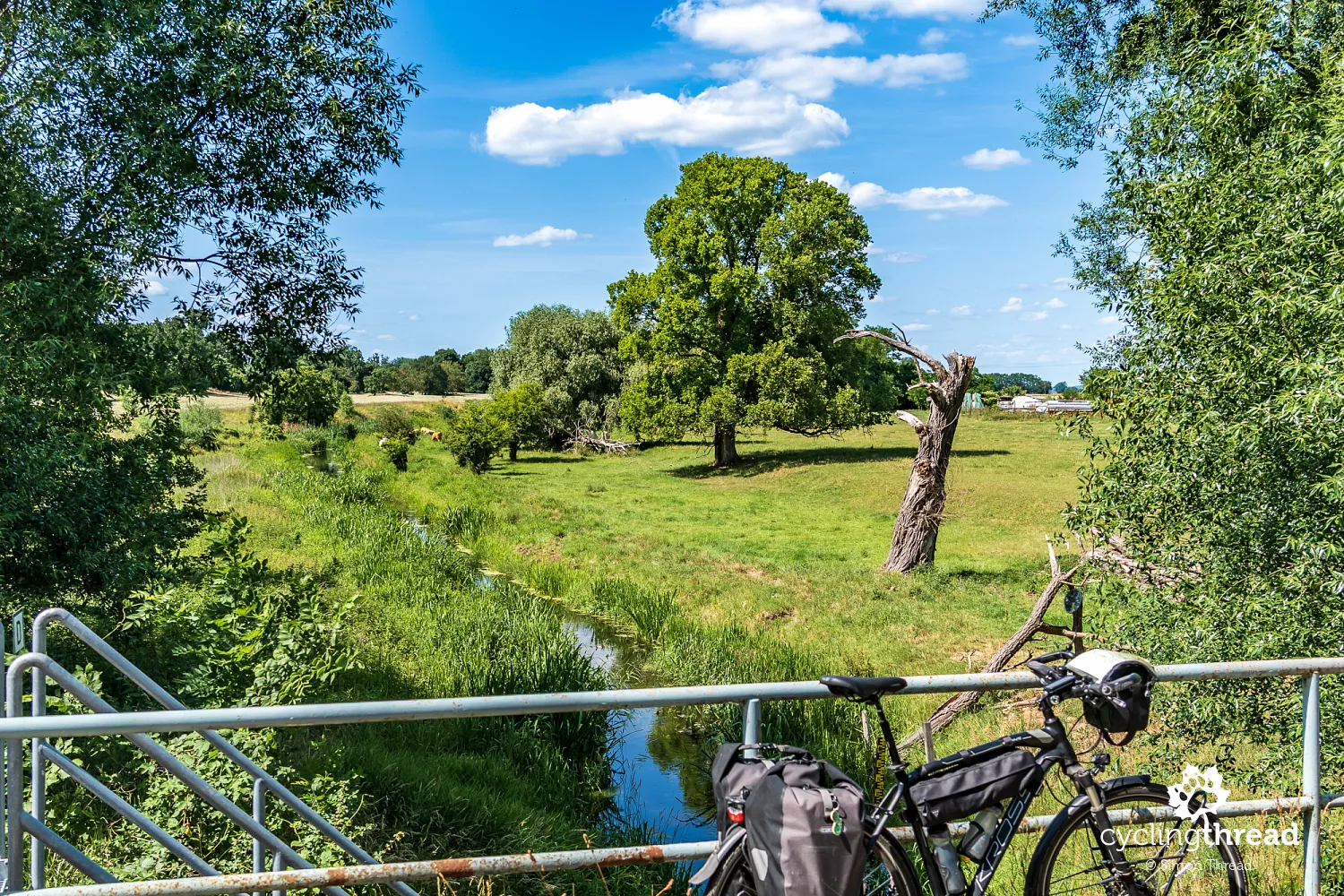
Just beyond Wriezen, it is worth paying close attention to the landscape. The narrow river - or rather a small watercourse crossing the route - is actually a former branch of the Oder River. Before the large-scale regulation of the river began in the eighteenth century under the initiative of King Frederick II of Prussia, the Oder flowed through this area in countless meanders, side channels and oxbow lakes, regularly flooding the surrounding land. The engineering works carried out between 1747 and 1762 shortened the river, drained large areas of wetlands and made it possible to cultivate the fertile lands of today's Oderbruch region. Yet the old channels never disappeared completely. In many places, they survive as canals, drainage ditches and small streams, serving as reminders of what the Oder Valley looked like before one of the most ambitious hydraulic engineering projects in the region's history.
One of the longest cycling bridges in Europe
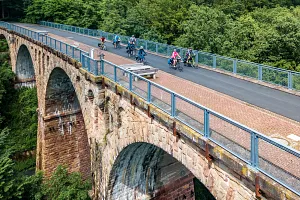
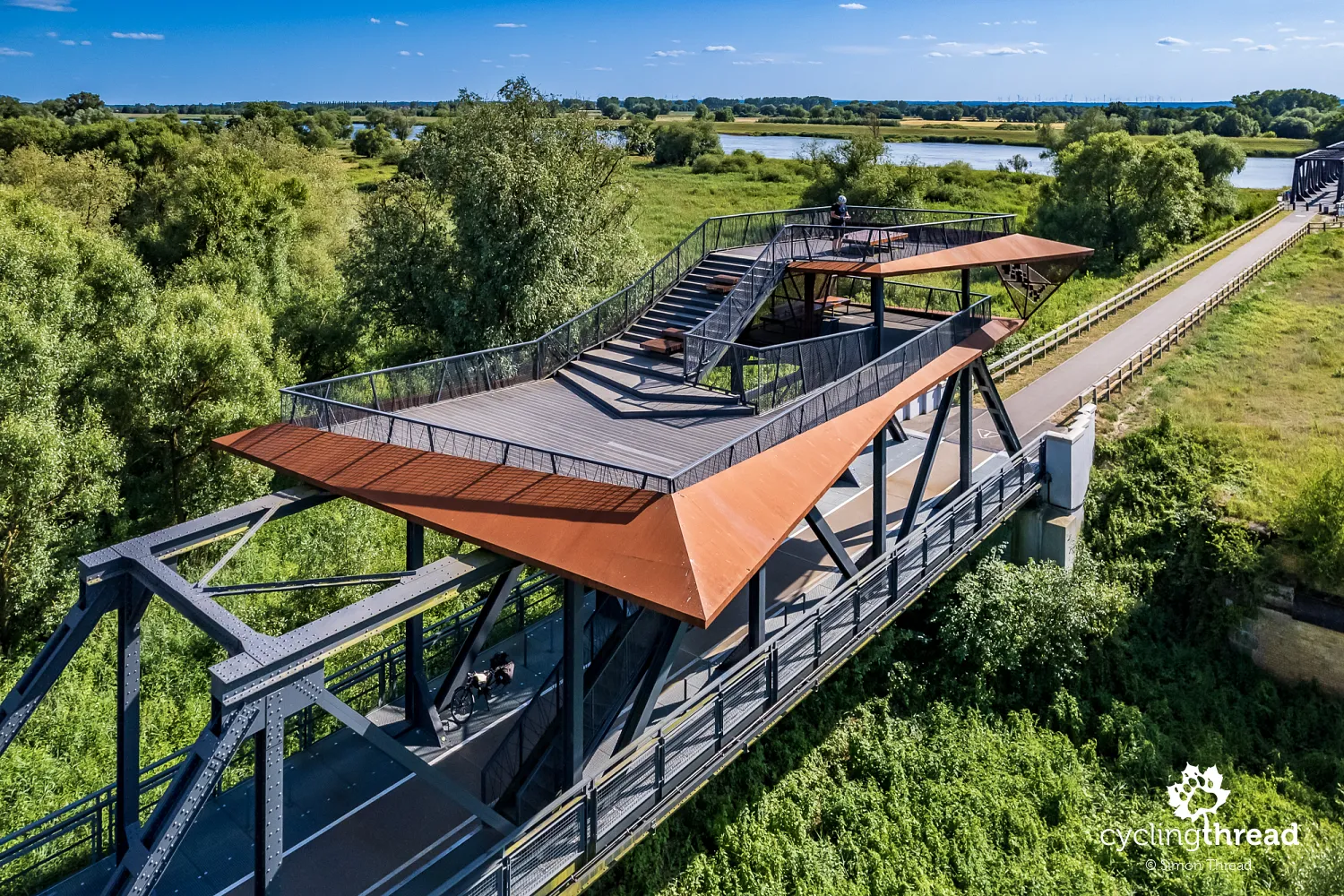
At this point, I leave the official route because of a remarkable transformation that has taken place here in recent years. Instead of following Tour Brandenburg, I turn off in Wriezen and follow an 11-kilometre cycle path built along a former railway line towards the Oder River and the Oder-Neisse Cycle Route. This detour allows me to visit one of the most extraordinary cycling infrastructure projects in Europe. The destination is the European Bridge Neurüdnitz-Siekierki - a former road and railway bridge built by Prussia in 1892 as part of a railway connection linking Wriezen with Jädickendorf and further on to Szczecin. After a major reconstruction, the bridge reopened in 2022 as a modern pedestrian and cycling border crossing between Poland and Germany. At more than 600 metres in length, it is now one of the longest cycling bridges in Europe and provides access to the rapidly expanding network of cycle routes in West Pomerania.
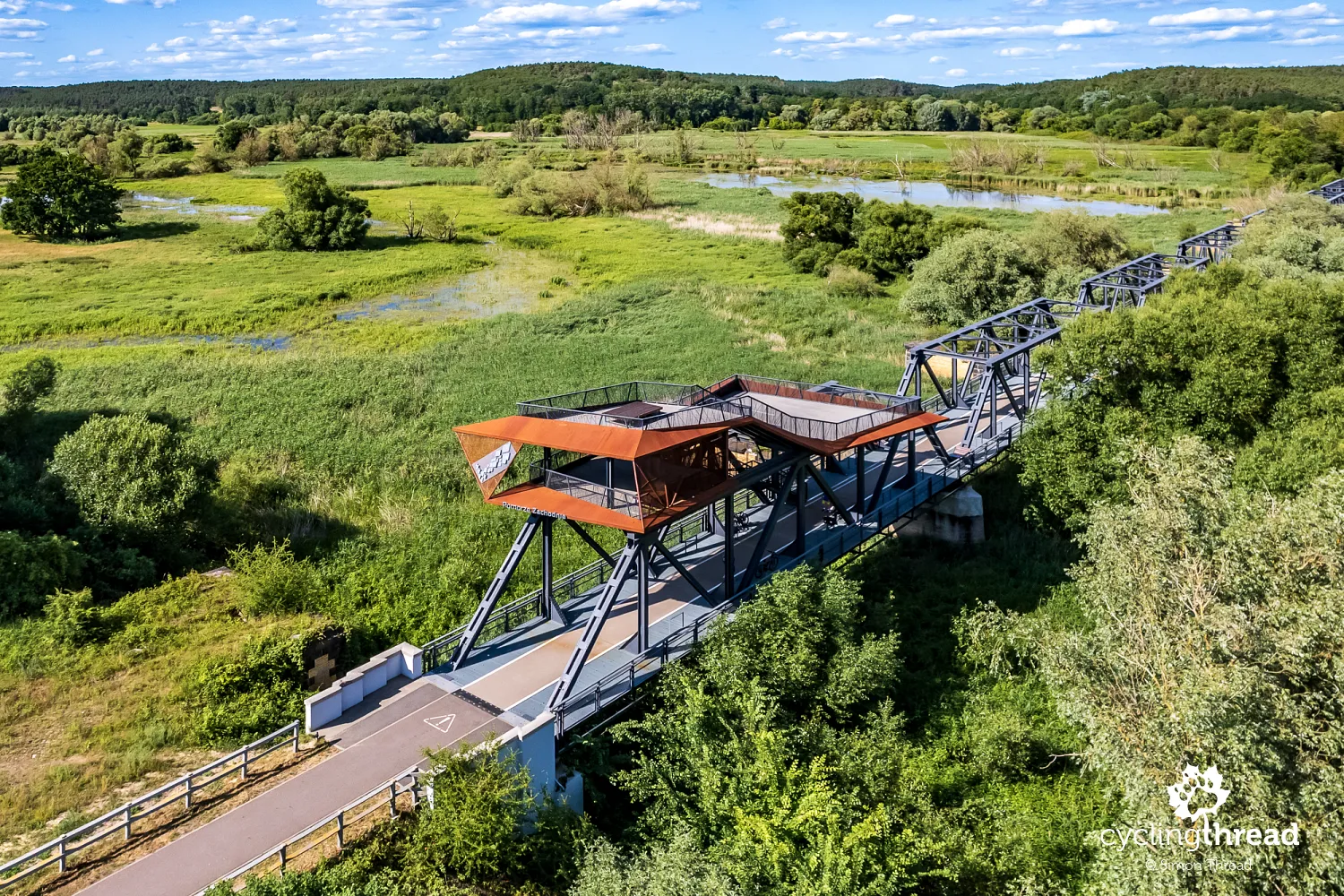
Walking or cycling across the bridge offers a good sense of the scale of the entire project. On the Polish side, it is worth stopping at the viewing platform, which provides excellent views of both the crossing itself and the extensive floodplains of the Oder Valley. Since opening, the bridge has quickly become one of the most popular cycling destinations along the Polish-German border. Once a year, the former railway crossing is also transformed into an open-air concert venue, attracting visitors from both sides of the border. The event, known as "Music on the Bridge", features musicians from the Mieczysław Karłowicz Philharmonic in Szczecin, while the audience gathers directly on the bridge and along both banks of the Oder.
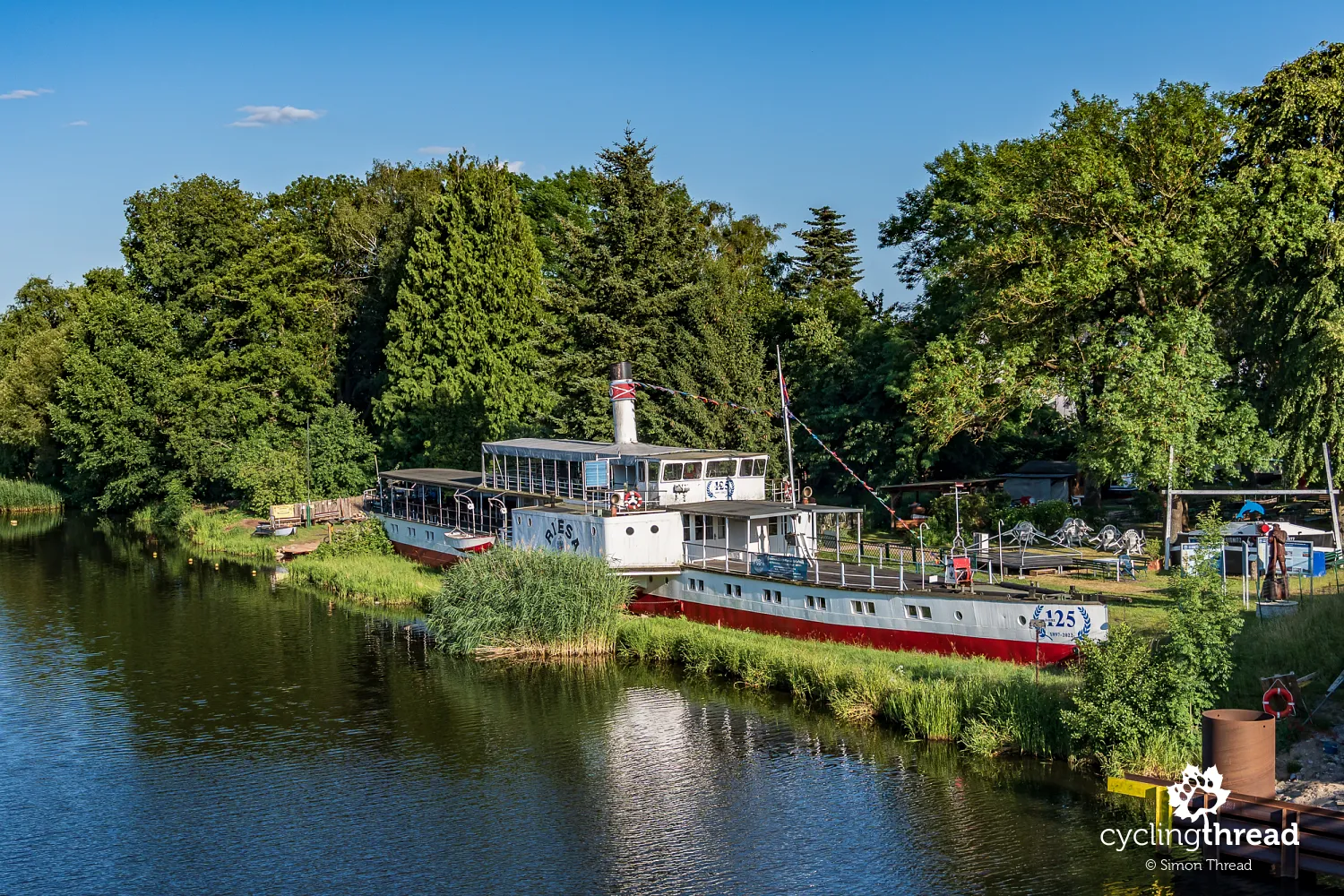
The final kilometres of the trip are accompanied by water. First, the route follows the present-day course of the Oder for several kilometres, then briefly traces one of its former channels. In Oderberg, it is worth stopping by the small harbour and taking a look at a place where important regional waterways have crossed paths for centuries. The town has long benefited from its location on the Oder, developing trade, navigation and services connected with river transport. Today, this heritage is reflected in the inland shipping museum and the numerous vessels moored along the waterfront. It is easy to see here how important canals and waterways have been - and still are - for connecting Berlin with the Oder and the Baltic Sea.
The unique Niederfinow ship lifts
Beyond Oderberg, cyclists face a few kilometres on a somewhat forgotten road before reaching the small village of Niederfinow. This section follows a former branch of the Oder and marks the beginning - or end - of the Oder-Havel Canal. Opened in 1914, the canal was built to improve transport between Berlin and the Oder, replacing older and less efficient water connections. It enabled barges to move goods more quickly and safely between the German capital, the Oder River and the Baltic ports. More than a century later, it remains one of the most important inland waterways in this part of Europe, something that becomes obvious from the steady stream of vessels using it.
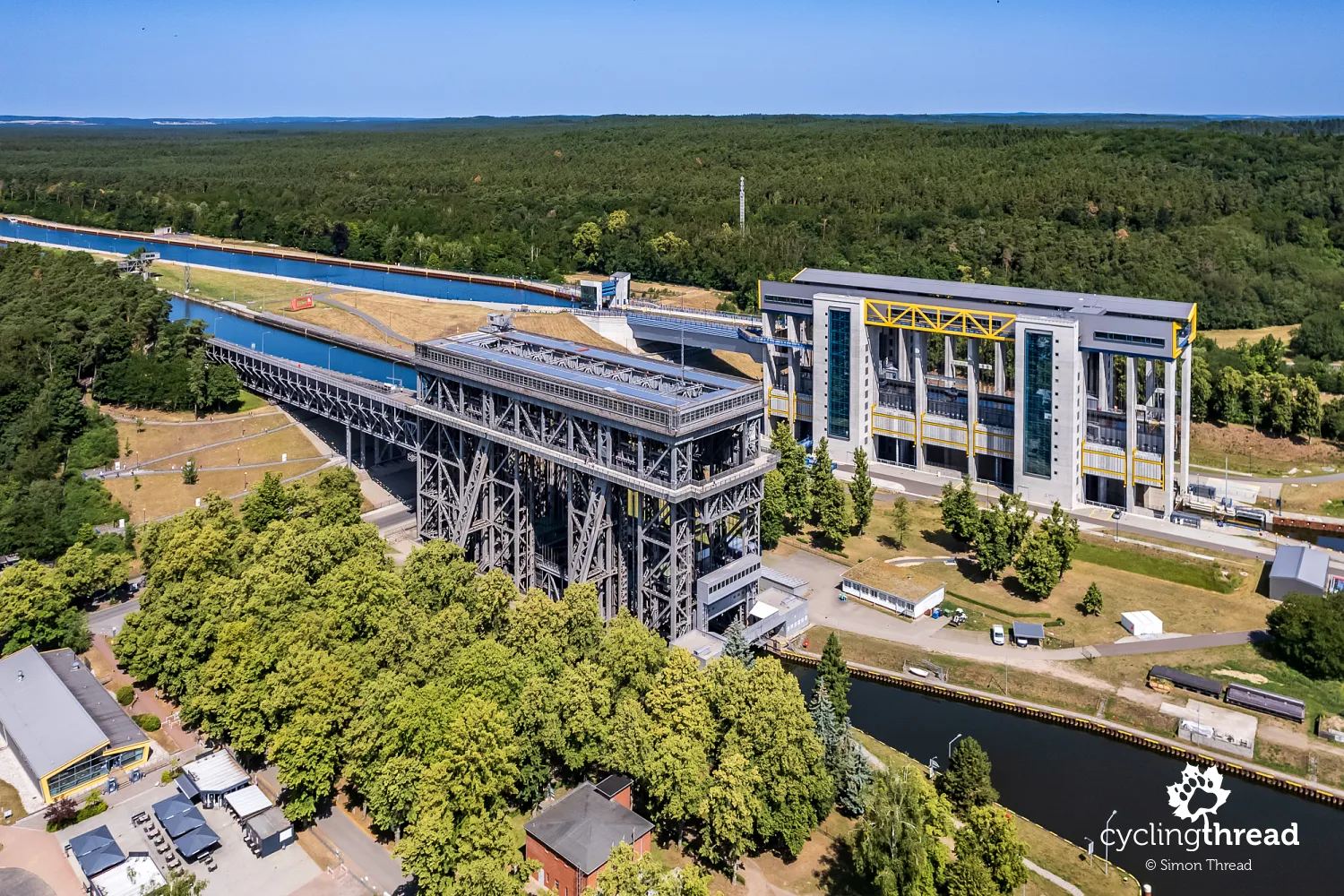
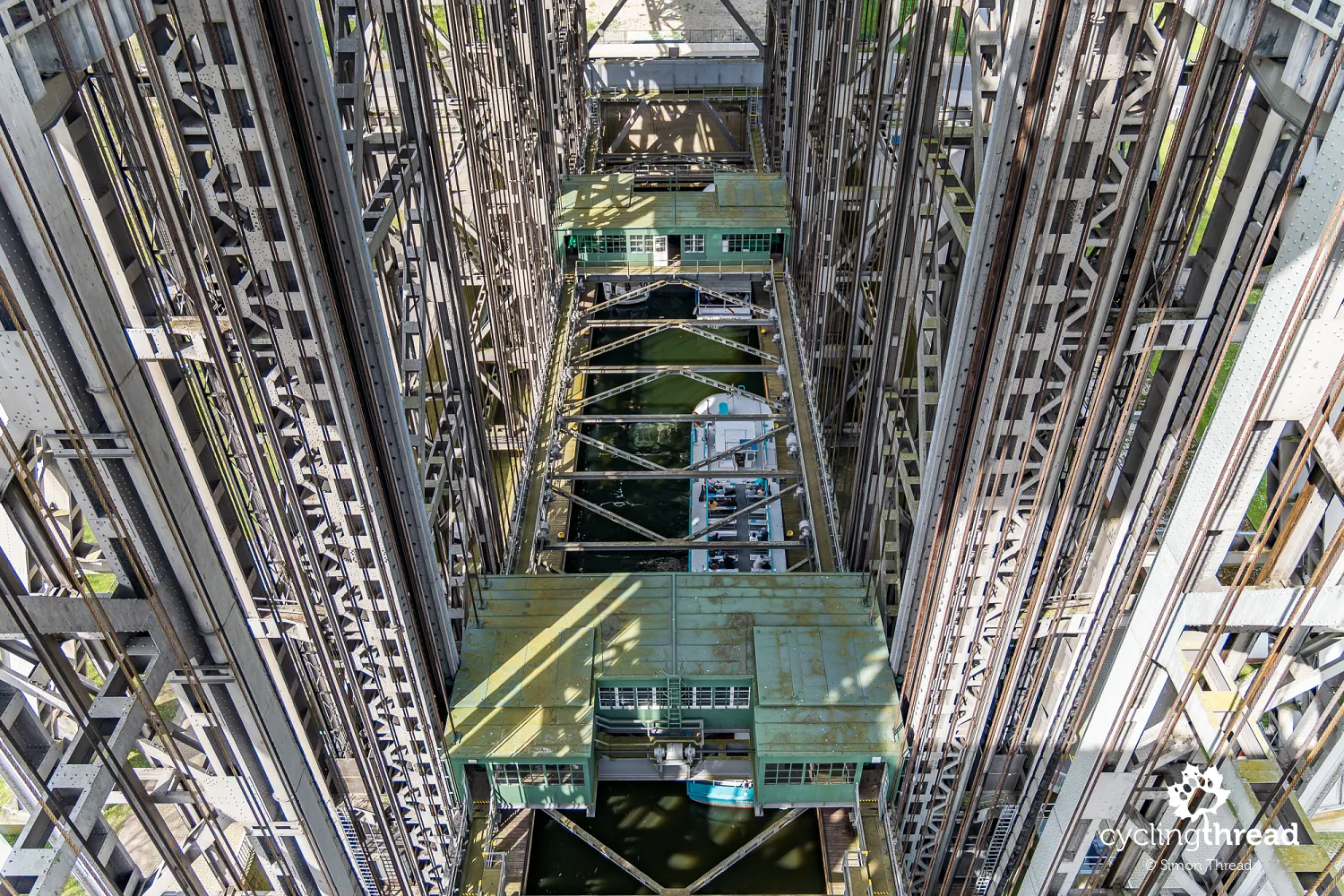
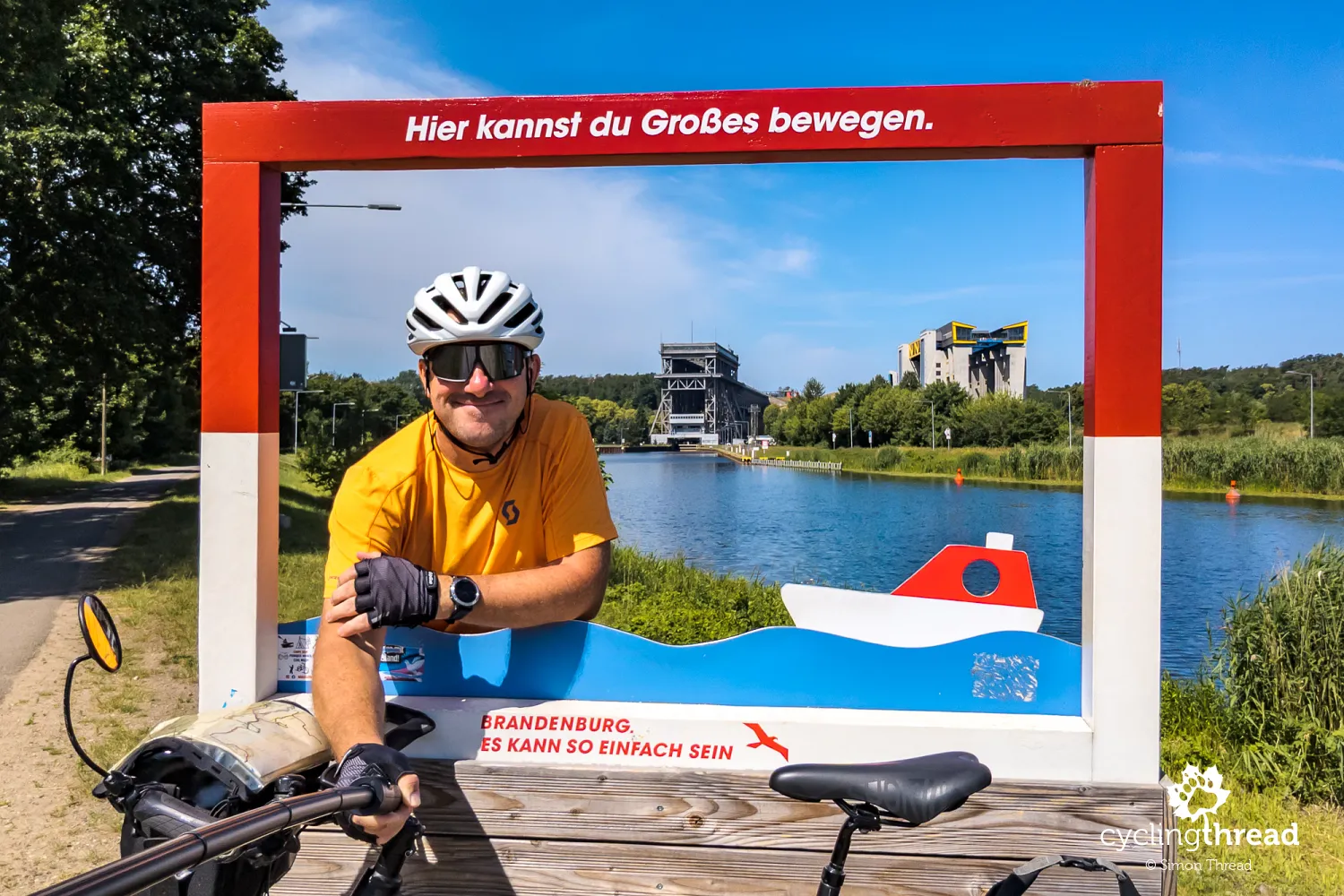
In Niederfinow, attention is immediately drawn to two remarkable structures that are almost unique on a global scale - the Niederfinow ship lifts. These engineering marvels allow vessels to overcome a difference in elevation of more than 36 metres between sections of the canal. Instead of passing through a traditional lock, a vessel enters a giant water-filled trough, which is then raised or lowered like an enormous elevator. The older ship lift was opened in 1934 and for decades stood as a symbol of German engineering. Since 2022, it has been joined by a much larger new structure that now handles most of the canal traffic. The sight of both lifts standing side by side is one of the most memorable images of the entire journey through Brandenburg. The historic lift also features an internal viewing platform, where visitors can watch the lifting process from close range.
Cycling along the charming Finow Canal
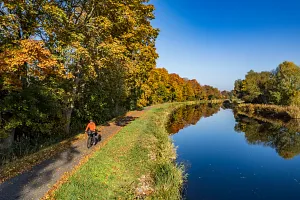
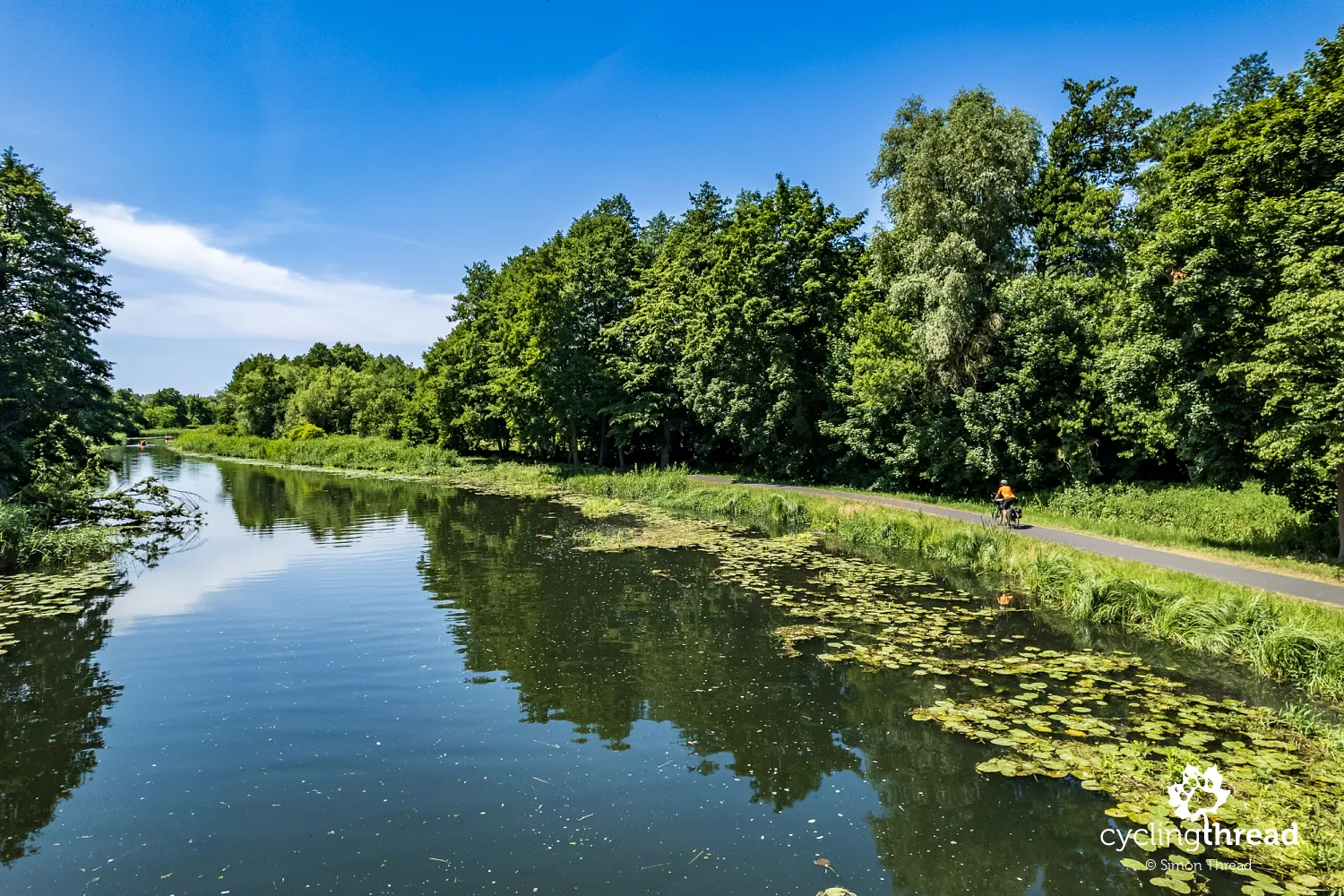
The approach to Eberswalde follows a delightful stretch beside the Finow Canal, one of the oldest artificial waterways in Germany. The cycle path runs almost directly along the water's edge, rarely more than a few metres away from the canal. On one side, cyclists are accompanied by the calm surface of the water; on the other, by trees, former industrial buildings and traces of the region's long connection with shipping and waterborne transport. The atmosphere here is unique and almost nostalgic, unlike anywhere else I have cycled. Without hesitation, I would rank this section among the most beautiful cycle paths I have ever ridden.
The journey ends in Eberswalde
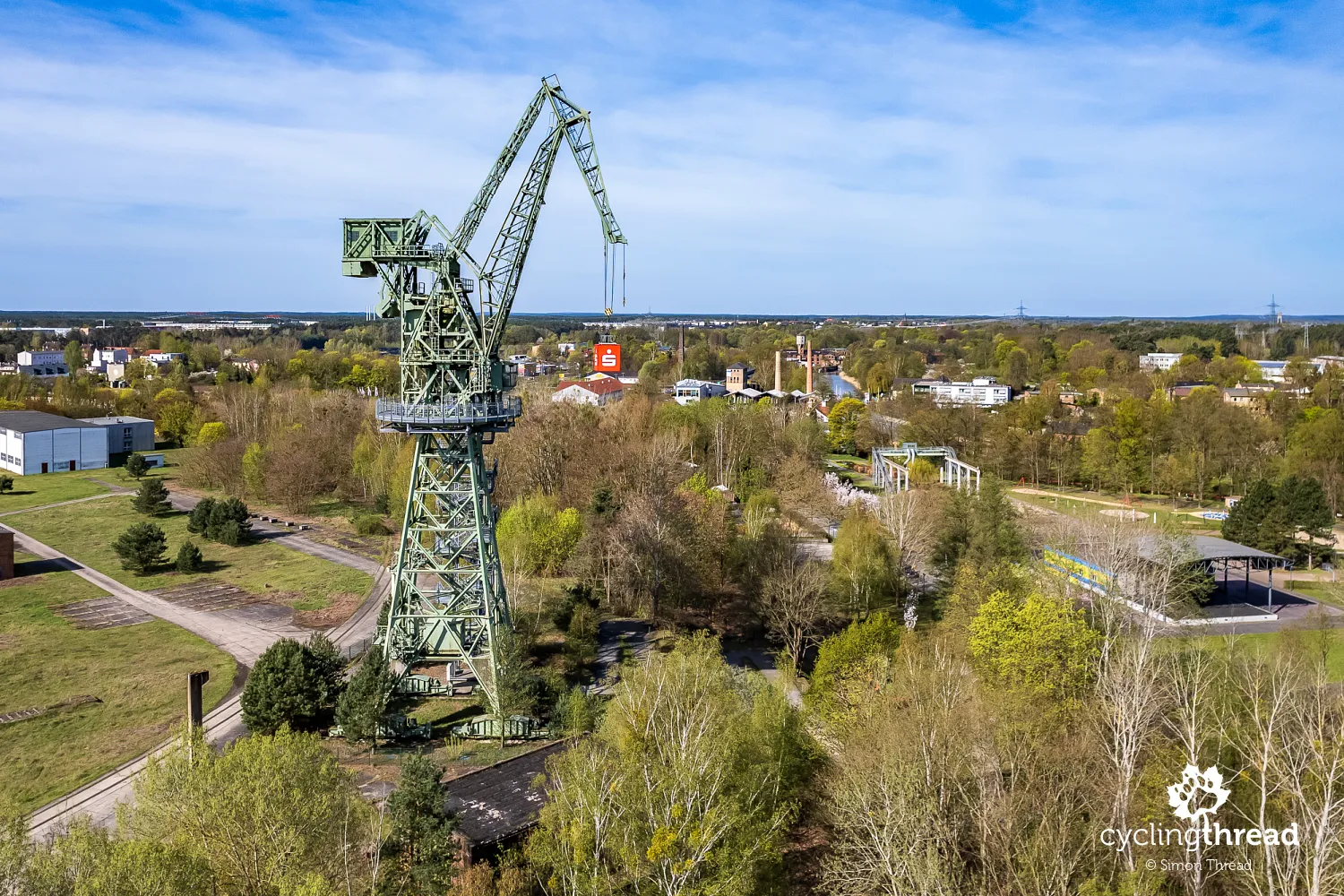
Just as Cottbus offers an excellent riverside cycle path along the Spree at the beginning of the journey, Eberswalde welcomes cyclists at the end with an equally impressive route along the water leading comfortably into the city centre. For much of its course through the city, Tour Brandenburg follows the Finow Canal. Along the way, cyclists pass historic hydraulic structures, including locks, bridges and various installations connected with the operation of the canal, which served as an important transport corridor in Brandenburg for centuries. One particularly eye-catching landmark is an old crane, a reminder of the city's industrial heritage. For decades, Eberswalde was one of Germany's leading centres for the production of cranes and cargo-handling equipment, while heavy industry, rolling mills and metalworking factories shaped the character of the city.
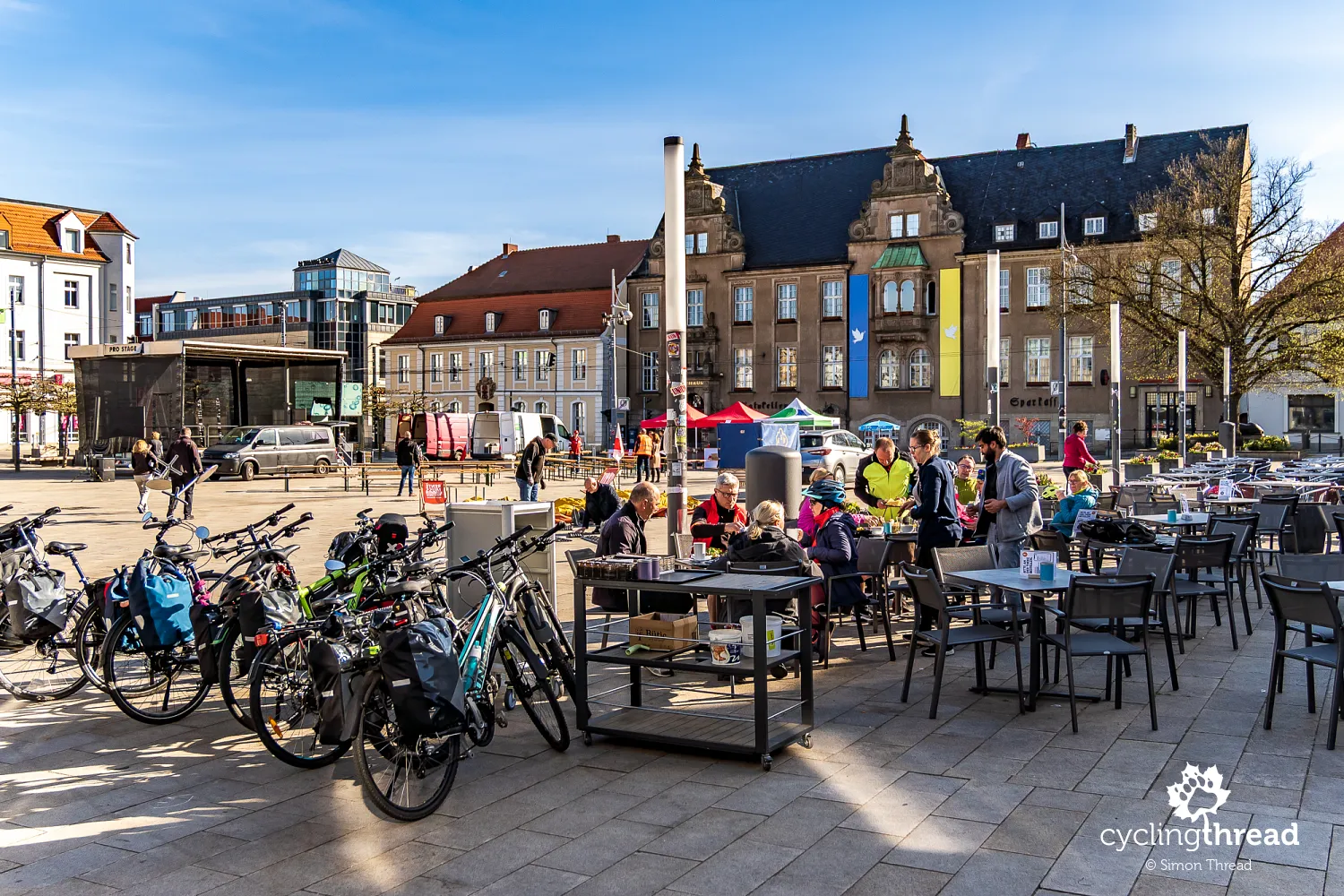
Eberswalde itself was founded in the thirteenth century and has served as the administrative centre of the Barnim district since 1990. It is often referred to as the "Waldstadt", or "Forest City", because it is surrounded by extensive woodlands - the Barnim Nature Park to the south and the Schorfheide-Chorin Biosphere Reserve to the north, a large forested area that we had already explored during earlier cycling trips in Brandenburg. Much of the historic centre was destroyed towards the end of the Second World War, which explains the distinctly post-war character of some parts of the city. Nevertheless, it is worth visiting the market square area, the Church of St Mary Magdalene and the surviving sections of the medieval town walls.
A new inspiration - Historic Town Centres
Before finishing the trip, I would like to highlight another excellent inspiration for cycling in Brandenburg - the "Historische Stadtkerne" route, or "Historic Town Centres". This cycling network consists of six multi-day loops spread across the state, clearly illustrated on the map available on its official website. As the name suggests, the routes connect Brandenburg's historic towns, leading cyclists through places that have preserved their medieval street layouts, market squares, churches, town halls and fragments of old fortifications. Most of these towns are far from being Germany's best-known tourist destinations, which makes them all the more rewarding for anyone interested in discovering the region's history and character. It is a fine example of how Brandenburg uses cycling tourism as a tool for exploring local cultural and historical heritage.
The ride from Cottbus to Eberswalde showed just how diverse Brandenburg can be. Within a relatively small area, the route passes through valuable natural landscapes - from the Peitz Fishponds and the former military lands of Lieberoser Heide, through historic towns and villages, to impressive hydraulic engineering structures and the bridge at Siekierki, now one of the most remarkable cycling crossings in Europe. It is easy to understand why Tour Brandenburg ranks among Germany's most interesting cycling routes. And with more than 1,100 kilometres to explore, it will continue to provide inspiration for future journeys for a long time to come.
Back to topHave a safe ride! 💚
Simon Thread
(Szymon Nitka)
I'm a passionate cycling traveler and the voice behind Cycling Thread. I explore Europe on two wheels, documenting the most scenic routes, inspiring places and cyclist-friendly practices. My writing blends personal experience with practical insights and a deep love of travel. I'm also a contributor to National Geographic Traveler magazine.